Wedding Guest Outfit Ideas: Are You a Classic or an Extravagant Dresser?
The invitation lands on your desk, you scan for the venue, and your brain immediately asks the same question everyone’s brain asks: what am I supposed to wear to this?
Here’s the short answer. The right wedding guest outfit comes down to three things working together: the dress code on the invitation, the venue, and the time of day. Nail those, avoid white, and pick something you actually feel good in. Everything else — whether you lean classic or extravagant — is just personal style. This guide gives you outfit ideas for every dress code, plus a quick way to figure out which kind of dresser you really are.
First, Decode the Dress Code (It’s Easier Than It Looks)
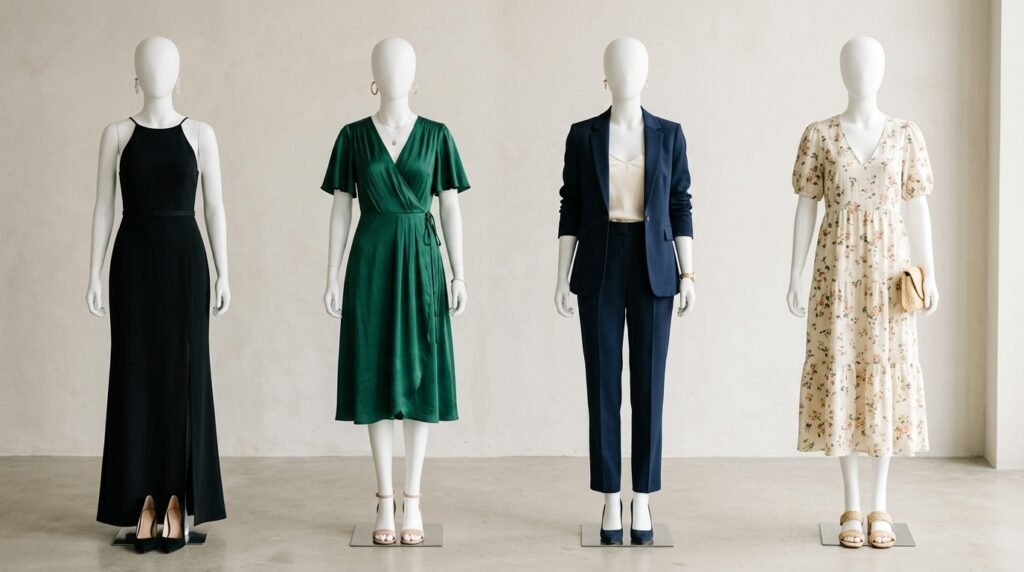
Dress codes exist to signal one thing: how formal the day will be. Once you can read that signal, choosing an outfit becomes far more intuitive. Here’s what each one actually means in 2026.
- Black tie: The most common formal code. Floor-length gowns or a polished maxi for women; a tuxedo or sharp dark suit with a tie for men. Modern midi dresses in luxe fabrics are increasingly accepted, but lean long and refined.
- Formal / Black-tie optional: A notch down. A dark suit with a tie works; a tux is welcome but not required. Floor-length and dressy cocktail-length both land here.
- Cocktail: The most common code in the US, and the safe default when none is listed. Think midi or knee-length dresses, structured jumpsuits, or a suit and tie. Skip floor-length gowns here.
- Semi-formal: Slightly more relaxed than cocktail. A suit with or without a tie; a polished midi or dressy separates. Err dressy over casual.
- Festive: Permission to have fun. Bolder color, a little texture, playful accessories — polished, just not serious.
- Beach / Garden / Casual: Breezy, lightweight fabrics like linen and chiffon. Still dress for a wedding — skip jeans, graphic tees, and flip-flops.
When in doubt, aim one notch more formal than casual, never the reverse. And if the code genuinely puzzles you, the couple’s wedding website or a quick text usually clears it up.
Outfit Ideas That Always Work
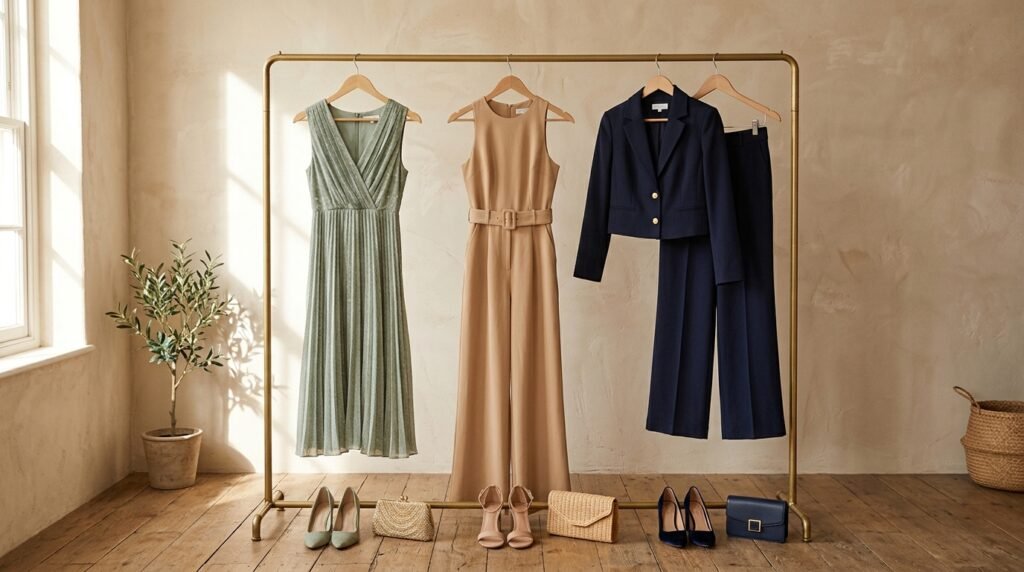
Some pieces are reliable across nearly every dress code. If you want a fail-proof starting point, build from one of these.
- The midi dress. Widely considered the most versatile choice for guests. It bridges cocktail, semi-formal, garden, and evening weddings with just a change of shoes and accessories.
- The structured jumpsuit. A sleek wide-leg cut reads cocktail; a sharper, tailored version handles formal. A great alternative if you’re not a dress person.
- The tailored suit or blazer set. For men, a dark suit with a crisp shirt covers most weddings. For women, a structured two-piece in a jewel tone is quietly powerful.
- The navy or jewel-tone column. When you can’t decide, a clean navy silhouette is one of the safest, most flattering options in the room.
For footwear, match the ground to the shoe: block heels or wedges for grass and gravel, sleek pumps or polished loafers indoors, flat dressy sandals for sand. The most stylish guests dress for the day — toasts, dancing, a windy patio — not just the photo in their head.
Classic vs. Extravagant: Which One Are You?
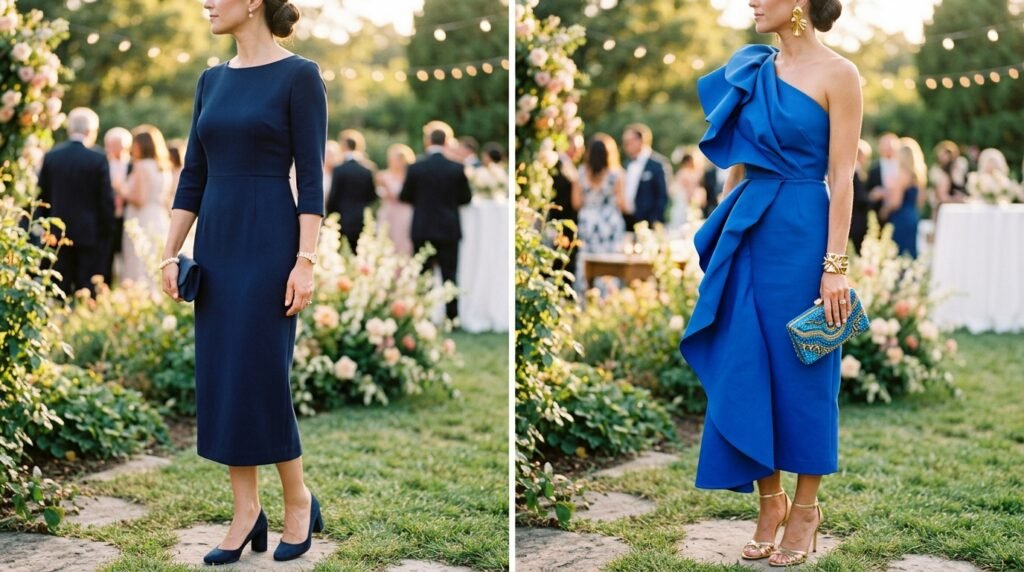
This is the fun part, and it borrows from those personality-style quizzes for a reason — your instinct usually tells you who you are.
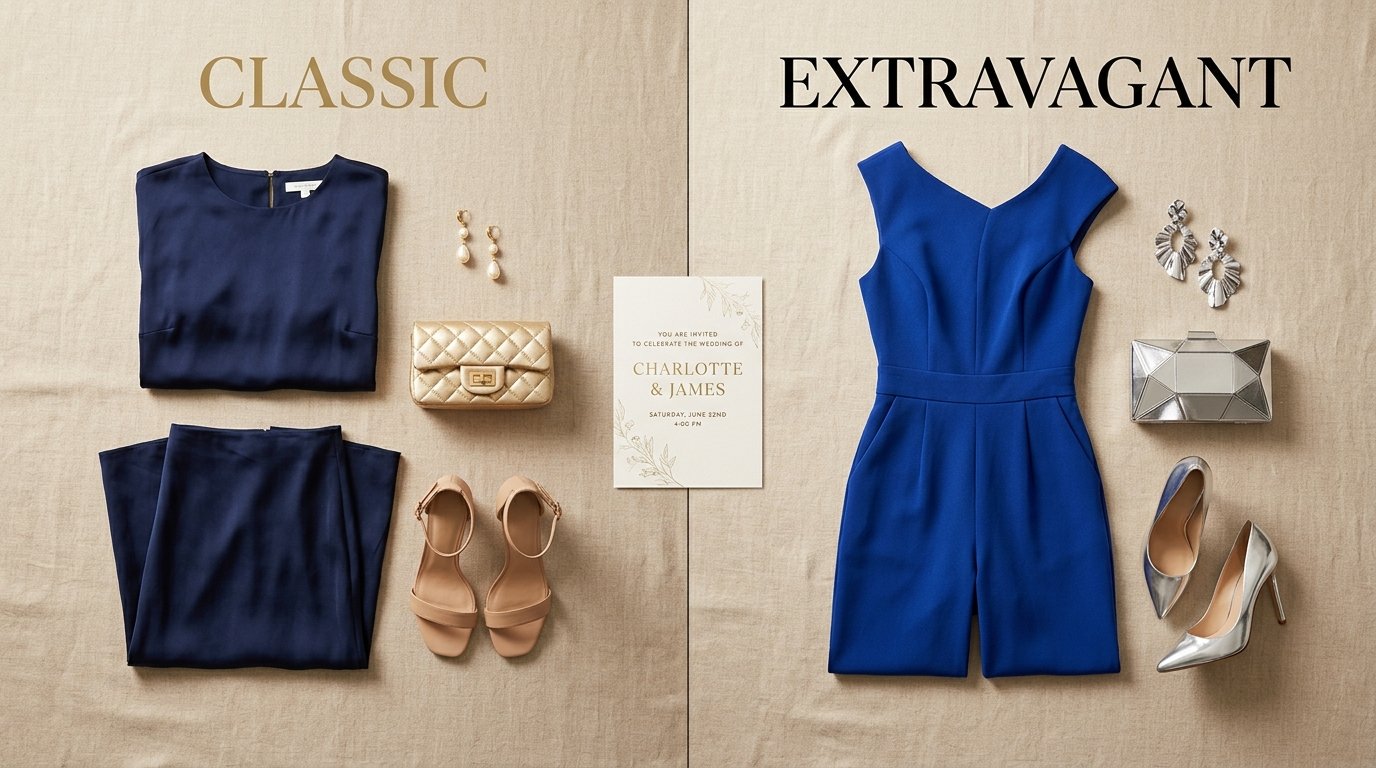
You’re a classic dresser if you gravitate toward clean lines, a restrained palette, and one quiet statement piece. Your wardrobe heroes are the navy midi, pearl or gold jewelry, a single elegant heel. You’d rather be remembered as polished than loud. Classic style ages well and almost never photographs badly — its only risk is reading slightly safe.
You’re an extravagant dresser if you reach for saturated color, sculptural details, and texture that catches the light. You love an asymmetrical neckline, a structured sleeve, a bold clutch. Extravagant style turns heads — the only rule is to channel it so you stand out without competing with the couple.
Neither is better. The best-dressed guests simply know which lane is theirs and commit to it fully, rather than landing in a half-hearted middle.
What’s Actually Trending in 2026
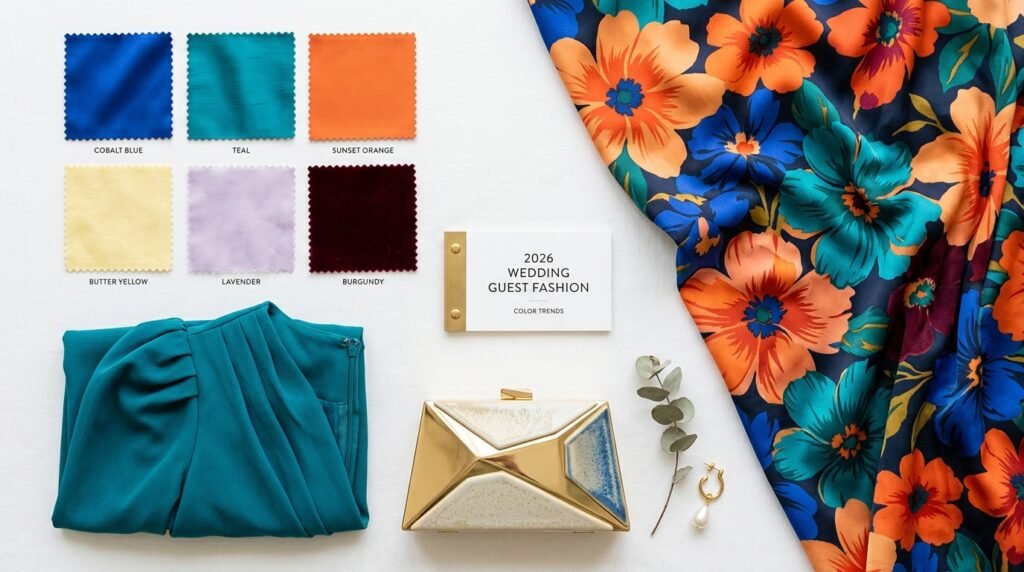
If you want your look to feel current, the season is leaning into what stylists are calling “architectural elegance” — structured sleeves, asymmetrical necklines, and fabrics with movement and texture. On the color front, expect to see cobalt blue, teal, sunset orange, fuchsia, butter yellow, lavender, dusty rose, sage green, and deep burgundy. Macro florals and modern, geometric lace are popular for outdoor celebrations, and bubble hems are making a playful comeback.
Classic dressers can adopt the palette without the drama — a butter-yellow midi with simple accessories. Extravagant dressers can go all in on a cobalt jumpsuit with sculptural jewelry. Same trends, two very different energies.
The Mistakes That Quietly Ruin a Good Outfit
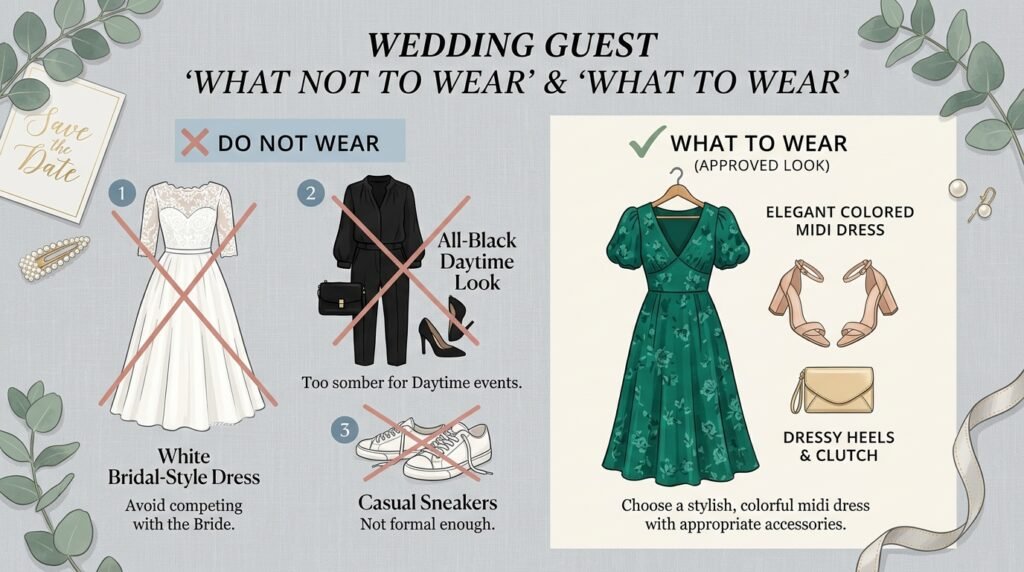
Being the best-dressed guest is partly about what you don’t wear. Skip these:
- White, ivory, cream, or anything bridal. Unless the invitation specifically asks for it, this stays reserved for the bride. The tradition traces back to Queen Victoria’s 1840 wedding, which popularized the white gown and the visual hierarchy we still follow.
- Head-to-toe black at a daytime or outdoor wedding. It can work for formal evenings; soften it with color in your accessories otherwise.
- Matching the bridesmaids’ exact color. An awkward photo waiting to happen.
- Anything too revealing or club-like. Deep plunges and very short hems distract from the occasion. Elegance wins.
- Underdressing. Even at a “casual” wedding, sneakers and everyday wear can read as not bothering. Reach for stylish flats or dress shoes instead.
- Outfits that fight the venue. A red-carpet gown at a small backyard ceremony is as off-key as shorts at a black-tie affair.
Putting It All Together
Start with the invitation, layer in the venue and time of day, then filter through your own classic-or-extravagant instinct. A spring garden wedding might mean a soft floral midi for the classic dresser and a macro-floral statement dress for the extravagant one. A black-tie evening might mean a sleek navy gown versus a structured cobalt column. The framework stays the same; only the volume changes.
When you feel genuinely confident in what you’re wearing, you stop fussing and actually enjoy the day — which is the entire point of being invited.
Style note: Dress codes and etiquette vary by culture, region, and the couple’s preferences. When a wedding has a cultural or themed dress code, or when you’re unsure, ask the couple directly — it’s always welcome.
FAQ Section
What is the safest outfit to wear to a wedding as a guest?
A midi dress, a structured jumpsuit, or a navy or jewel-tone two-piece. These adapt across cocktail, semi-formal, and evening weddings with just a change of shoes and accessories.
Can wedding guests wear black?
Yes, especially at formal or evening weddings. To keep it celebratory rather than severe, soften it with fabric, silhouette, or a pop of color in your accessories. Avoid all-black at beach or garden ceremonies.
What does “cocktail attire” actually mean for a wedding?
Cocktail sits between semi-formal and formal. For women, that’s a mini, knee-length, or midi dress, or a polished jumpsuit. For men, a suit and tie or a tailored blazer with dress pants. Skip floor-length gowns.
What colors should you avoid wearing to a wedding?
Avoid white, ivory, cream, and anything that could be mistaken for bridal. Also skip matching the bridesmaids’ exact color. Beyond that, saturated 2026 shades like cobalt, teal, and burgundy are fair game.
Can I wear a jumpsuit or pantsuit instead of a dress?
Absolutely. A structured jumpsuit or tailored pantsuit is a great dress alternative — just match its formality and fabric to the dress code, choosing silk, satin, or crepe over casual cotton for dressier events.
What shoes should I wear to an outdoor wedding?
Block heels or wedges for grass and gravel so you don’t sink, and flat dressy sandals for sand. Save stilettos for indoor, paved venues.