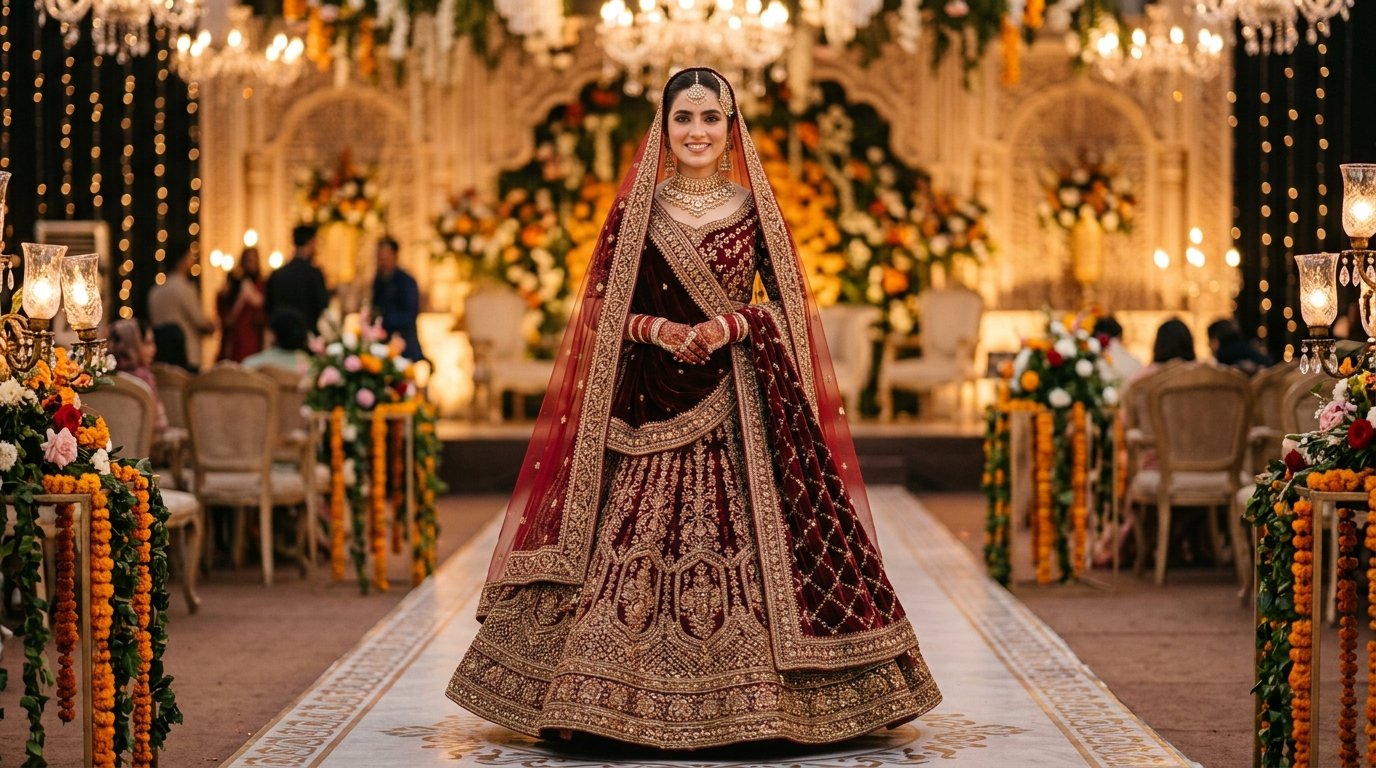
Royal Barat Bridal Dress Ideas for a Luxurious Wedding Look
A royal Barat bridal dress is built around rich, deep color tones like maroon, wine, or antique red, heavy handwork embroidery, and statement dupatta styling. For 2026, brides are choosing structured silhouettes with intentional embellishment placement instead of all-over embroidery, creating a look that feels both regal and modern.
Your Barat is the one function where your outfit needs to do the most work. It’s the most photographed moment of the entire wedding, the one your guests will remember, and the one that sets the tone for every picture that follows. Getting it right isn’t just about picking a pretty dress — it’s about understanding fabric, color psychology, and styling choices that actually photograph and move well in real life.
Why the Barat Dress Feels Different From Every Other Wedding Outfit
Every wedding function has its own mood. Mehndi is playful and colorful. Walima is soft and elegant. Barat, on the other hand, is meant to feel grand — this is where brides lean into tradition and drama the most.
That’s why red has stayed the dominant Barat color for generations. But the shade of red matters more than people realize.
The Color Story: Why Deeper Reds Are Taking Over
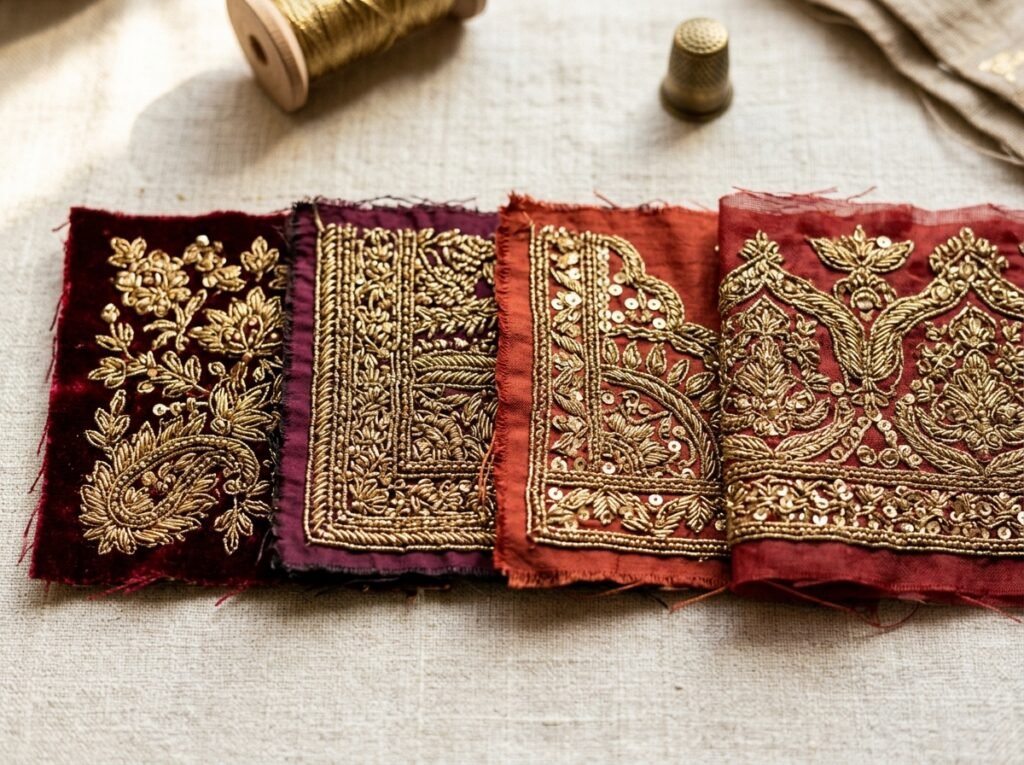
Classic bridal red hasn’t gone anywhere, but the tone has matured. Instead of the bright, flat red brides leaned on years ago, 2026 collections are showing:
- Maroon — deep, warm, and flattering across skin tones
- Wine — slightly purple-red, feels more editorial and less traditional
- Rust-red — earthy and warm, pairs beautifully with gold work
- Antique red — a muted, slightly aged red that photographs like an heirloom piece
These deeper tones tend to look richer under both daylight and indoor event lighting, which is exactly why photographers and stylists have been pushing brides toward them.
Practical Tip
If your venue has warm, yellow-toned lighting (most banquet halls do), avoid very bright reds — they can look almost orange in photos. Maroon and wine hold their color much better indoors.
Silhouettes: Gharara Revival Meets Structured Lehengas
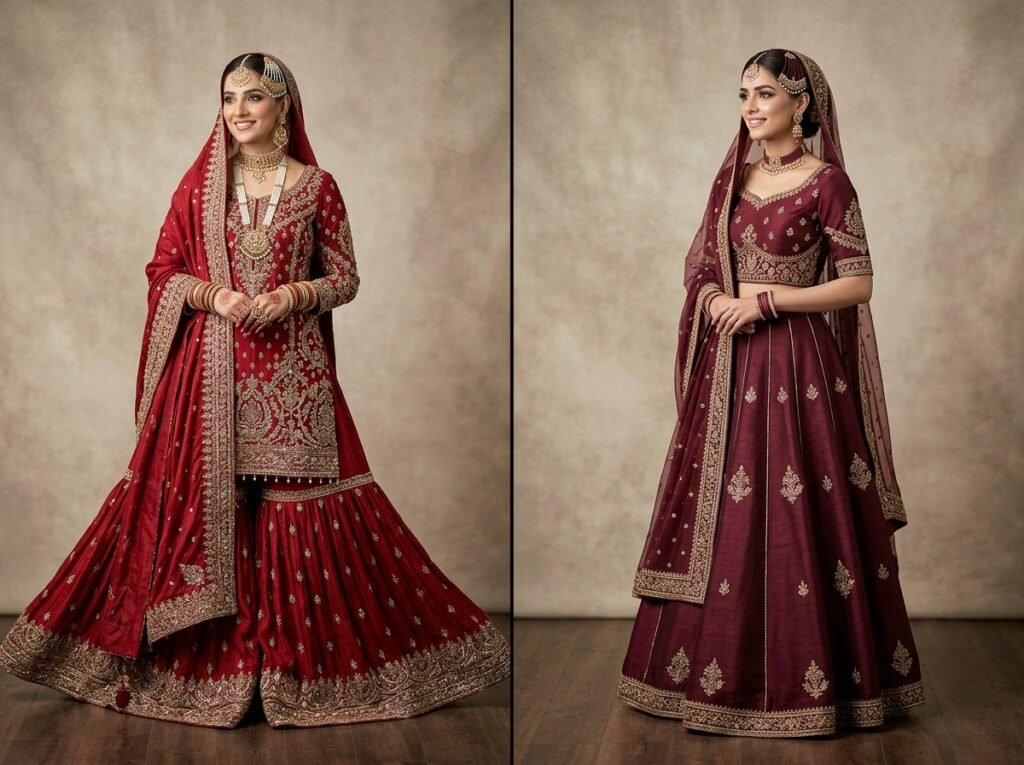
Two silhouettes are dominating royal Barat looks right now, and they serve very different bride personalities.
1. The Farshi Gharara
This traditional silhouette is having a real comeback. It’s flowy, dramatic, and gives that old-world “royal” feeling instantly — especially in heavier fabrics like jamawar or raw silk.
2. Structured Lehengas
For brides who want movement and a cleaner line, structured lehengas with sharper cuts are just as popular. They tend to be easier to move and sit in throughout a long event.
Neither is “more bridal” than the other — it genuinely comes down to how you want to move and sit during your Barat.
The Dupatta Is the Real Statement Piece This Year
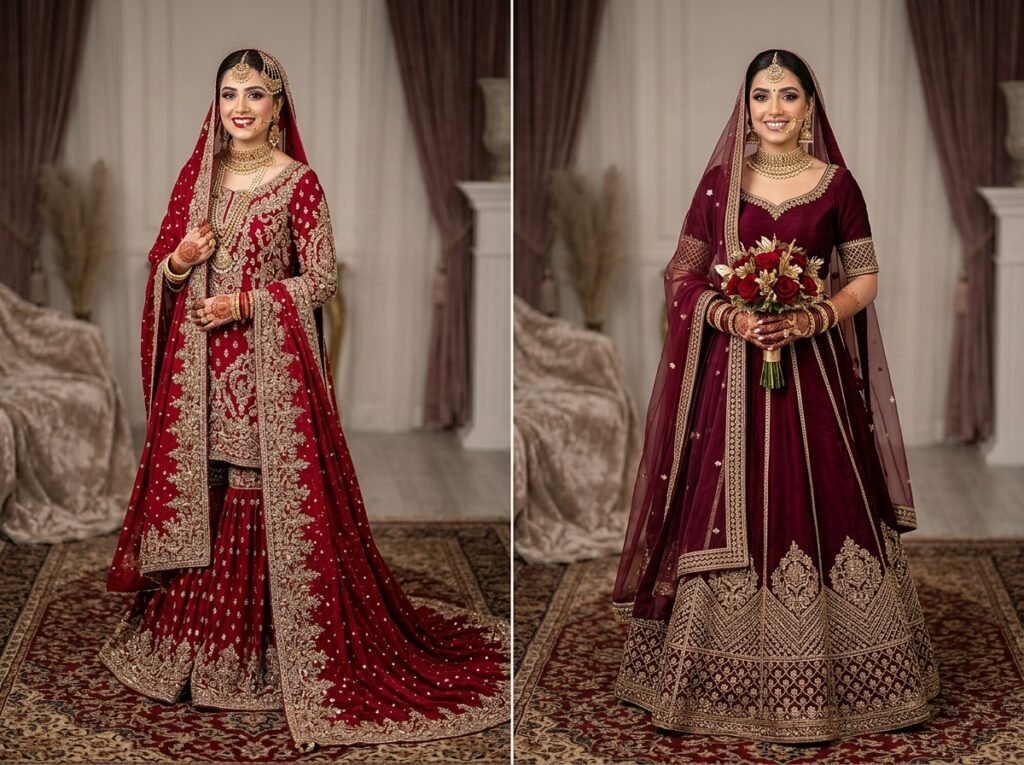
If there’s one styling shift every bride should know about, it’s this: the dupatta has become the focal point of the whole look.
Brides are now styling with:
- Double dupattas — one heavier, embroidered dupatta draped over the head, with a second lighter one for movement
- Heavy borders — thick, embellished edges that frame the face and shoulders
- Cape-style draping — a more modern take that turns the dupatta into a structural piece rather than just a cover
This detail alone can transform a relatively simple lehenga into something that looks far more expensive and intentional.
Fabric and Embroidery: Less Coverage, More Intention
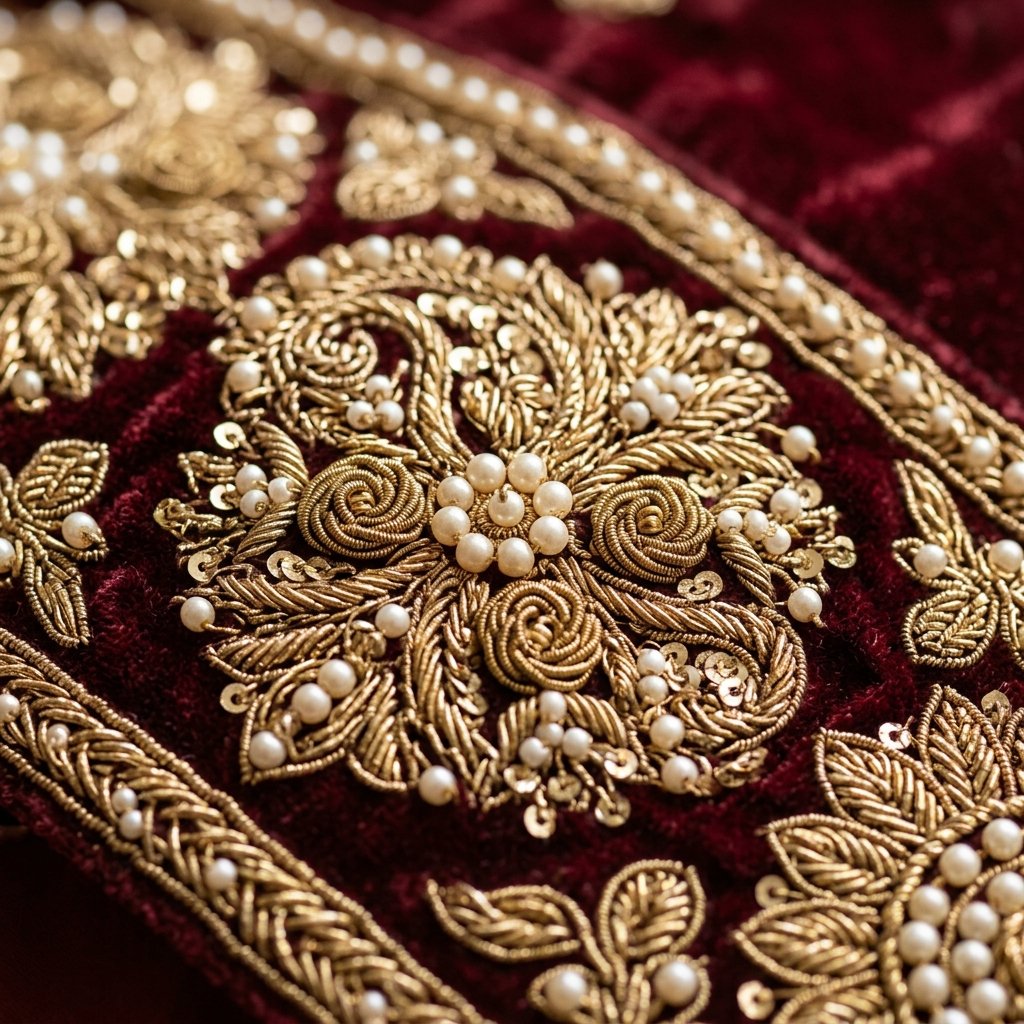
One of the clearest shifts in luxury bridal wear this year is a move away from “cover every inch” embroidery. Instead, designers are placing heavier handwork — think dabka, naqshi, pearl, and sequin detailing — strategically along borders, necklines, and the dupatta.
This does two things:
- Makes the outfit feel lighter and easier to wear for hours
- Creates a more editorial, “your eye goes exactly where it should” look in photos
If you’re working with a tailor or designer, ask specifically about handwork placement rather than just “how much embroidery” — that’s the detail that separates an expensive-looking outfit from an overwhelming one.
Building Your Royal Barat Look: A Practical Checklist
- Choose your fabric first (jamawar and raw silk hold structure best for heavier work)
- Pick a deeper red tone suited to your skin tone and venue lighting
- Decide on gharara vs. lehenga based on comfort and movement, not just trend
- Plan your dupatta styling early — it often needs separate stitching and draping practice
- Book custom pieces early — heavier bridal embroidery genuinely needs weeks to complete properly, so last-minute orders often mean compromised detailing
Also Read: 10 Elegant Midi Dress Outfits for Summer 2026
Final Thoughts
A royal Barat bridal dress isn’t just about how much embroidery it has — it’s about color choice, fabric weight, and how thoughtfully the dupatta is styled. The brides who end up with the most striking, timeless Barat photos are usually the ones who made intentional choices at every step, not just the ones who picked the most expensive outfit.
This article is for style and fashion inspiration only. Pricing, fabric availability, and delivery timelines vary by designer and region — always confirm details directly with your bridal boutique or tailor.
FAQ Section
What color is best for a royal Barat bridal dress?
Deeper red tones — maroon, wine, rust-red, and antique red — are the top choices for 2026, as they photograph richly under both natural and indoor lighting compared to brighter reds.
Is gharara or lehenga better for a Barat look?
Both work well. Gharara suits brides who want a dramatic, traditional silhouette, while structured lehengas offer easier movement for longer events. The choice comes down to comfort and personal style, not trend alone.
Why is double dupatta styling trending for Barat?
A heavier embroidered dupatta paired with a lighter second layer adds volume, drama, and a more finished, “runway” look to the overall Barat outfit — it’s currently one of the most requested styling details.
How early should I order a custom Barat dress?
Heavier bridal embroidery typically needs several weeks to complete properly, so it’s best to finalize your design and place custom orders well ahead of your wedding date to avoid rushed detailing.
What fabric works best for a heavily embroidered Barat outfit?
Jamawar and raw silk are popular choices because they hold structure well under heavy handwork like dabka, naqshi, and sequin detailing without losing shape.