
Best Luxury Hair Treatments for Damaged Hair: What Actually Works in 2026
There is one error that costs readers more money than every other mistake combined, and it happens in the first five minutes. Hair starts breaking, panic sets in, and the response is to buy upward — the heaviest mask on the shelf, the longest service on the salon menu, whatever carries the highest price. Six weeks later nothing has changed. The best luxury hair treatments for damaged hair only perform when they answer the specific problem your hair has, and hair damage is not one condition. It is at least three, and two of them require opposite solutions. Load protein onto hair that was thirsty and it will snap faster than before you started.
So this guide sorts everything by severity. Find your tier, spend there, and ignore the rest until you have earned your way up.
Key Takeaways
- Identify your damage type before spending anything — dehydration and structural breakage need opposite treatments
- Tier 1 (mild): at-home bond repair, weekly treatment mask, a proper sealing layer
- Tier 2 (moderate): in-salon bond work, glossing, scalp spa treatment, heat-assisted conditioning
- Tier 3 (severe): restructuring and smoothing services, delivered in stages rather than in one appointment
- Nothing on earth mends a split end — that comes off with scissors or it keeps travelling
- Repetition beats expense: a modest routine used weekly outperforms one lavish service a year
The Short Answer
The best luxury hair treatments for damaged hair sit in three tiers: at-home bond repair and rich masks for mild damage, in-salon bond treatments, glossing and scalp rituals for moderate damage, and professional restructuring or smoothing for severe breakage. Choose by damage severity, never by price.
Before You Book: Diagnose The Damage, Not The Price Tag
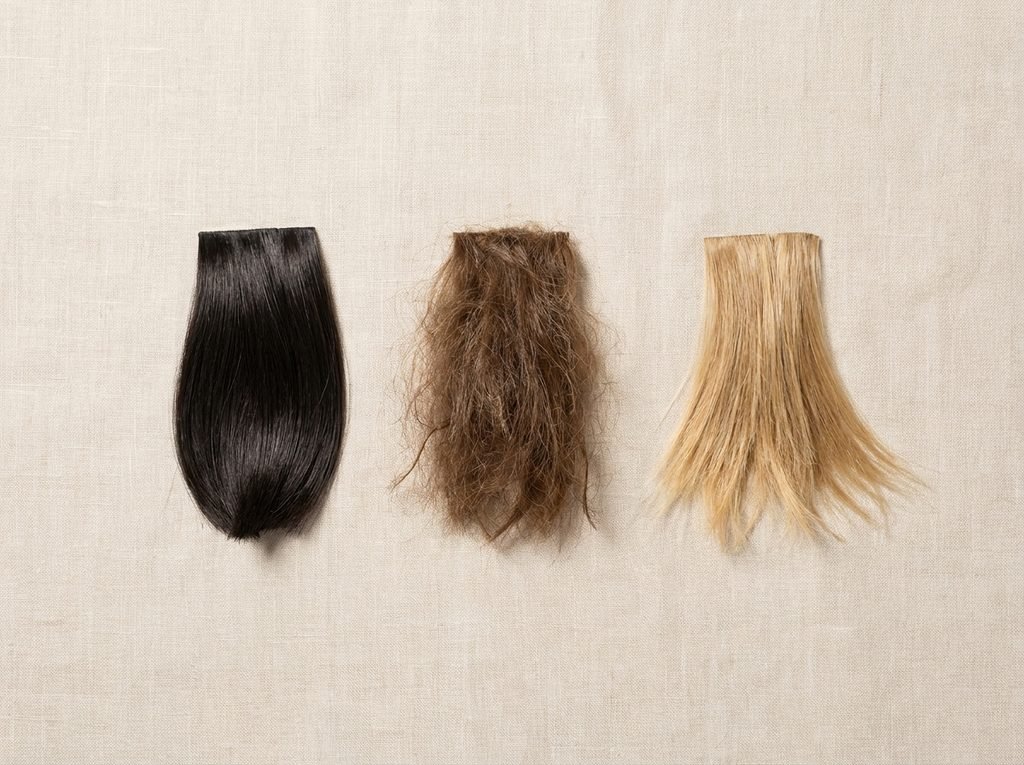
Three short checks, done at home, will tell you more than any product description.
The elasticity check. Take one wet strand, hold it at both ends and pull slowly. Hair in reasonable condition extends slightly and recoils. Hair that keeps extending like warm chewing gum, then hangs slack, has lost internal structure and needs strengthening. Hair that gives nothing at all and simply breaks is either dehydrated or already carrying too much protein, and adding more will accelerate the breakage.
The porosity check. Take a clean shed strand and rest it on the surface of a glass of water. Rapid sinking indicates a raised, permeable cuticle — real damage, and moisture that escapes as fast as you add it. A strand that sits on the surface for several minutes indicates a tightly closed cuticle, where the culprit is usually residue rather than damage.
The friction check. Run your fingers down a wet section from mid-length to tip. Smooth and slippery with a slight resistance is normal. A gritty, catching, almost sandpaper feel means the cuticle scales are lifted and chipped. A mushy, over-soft feel means the opposite problem.
Then work through this quickly:
- Is your hair breaking along the mid-lengths rather than only at the tips?
- Does it feel spongy or shapeless while wet, then coarse once dry?
- Has it been lightened, permed, relaxed or chemically straightened within the past year?
- Are the last few centimetres noticeably paler, thinner or wispier than the rest?
- Does fresh colour drain away within two or three washes?
- Do you live somewhere with hard water, intense sun, chlorinated pools or heavy humidity?
Three or more affirmatives place you in Tier 2 or Tier 3. One or two, and Tier 1 is where your money will do the most work.
Tier 1: Beginner — Luxury You Can Use At Home
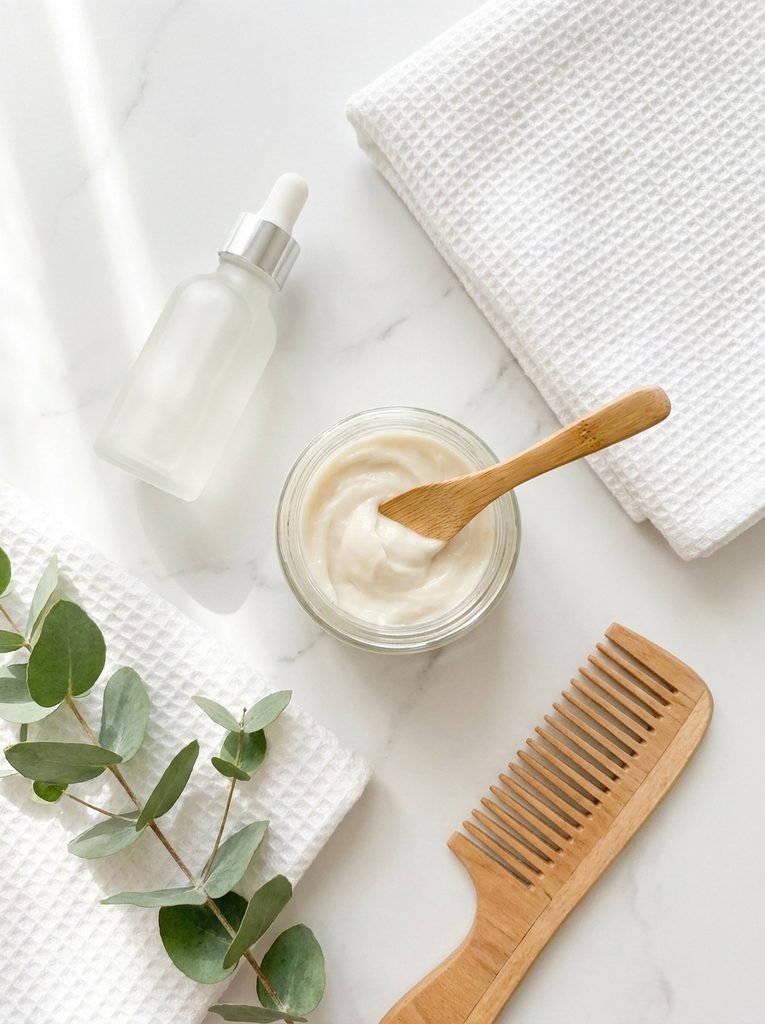
Most readers belong here, and honestly, most of the visible improvement people credit to expensive salon work actually originates at this level. The damage is surface-level: flatness, roughness through the ends, frizz that will not settle, colour that loses its depth too quickly.
Bond Repair Treatment At Home
Bond repair is the most genuinely useful development in hair care of the past decade, because it operates inside the strand rather than sitting on top of it. Two broad approaches exist, and they solve related but separate problems.
One approach targets the sulphur cross-links that lightening, permanent colour and repeated heat break apart. These build results gradually — think of it as reinforcement laid down slowly over several weeks of steady use. The second approach uses short peptide fragments small enough to travel into the cortex and reconnect fractured keratin chains. This route acts quickly, often in a single short application, which makes it the better response immediately after a harsh chemical service.
If your hair is already compromised, begin with the fast-acting route to stabilise it, then maintain with the gradual one. Running both is not duplication. It is how the two chemistries are designed to be used.
Luxury Hair Mask For Damaged Hair
Premium masks justify their cost through concentration, sensory quality and how evenly they distribute — not through exotic ingredient lists. Useful things to look for are hydrolysed proteins, ceramides, fatty alcohols, panthenol and lightweight plant lipids. Apply to towel-dried rather than dripping hair, concentrate on mid-lengths and ends, and honour the full processing time on the packaging.
Warmth changes the result substantially. A warm towel wrapped over a cap will do more for absorption than doubling the quantity of product. Weekly suits most people. Twice weekly is reasonable if you lighten your hair or swim regularly.
Sealing Layers, Leave-Ins And Heat Protection
The least glamorous category, quietly responsible for the largest share of everyday improvement. A well-formulated oil or serum flattens a lifted cuticle, reduces the friction that causes mechanical breakage, and produces most of the reflective shine people associate with expensive hair.
Heat protection is not optional if you use hot tools. It costs a fraction of a single salon appointment and prevents precisely the damage you would otherwise pay a professional to address. If you live somewhere sunny, look for the same protection against ultraviolet exposure — sunlight degrades both keratin and colour, slowly but permanently.
Tier 1 action list:
- Fix one weekly bond repair session on a specific day and keep to it
- Replace conditioner with a treatment mask once a week
- Apply heat protection every single time, without negotiation
- Lower your tool temperature by 20°C and make one slow pass instead of three fast ones
- Switch to a smooth pillowcase and dry with a soft cotton cloth rather than a rough towel
- If your water is hard, add a chelating wash once a month to strip mineral buildup
Tier 2: Intermediate — In-Salon Rituals Worth Booking
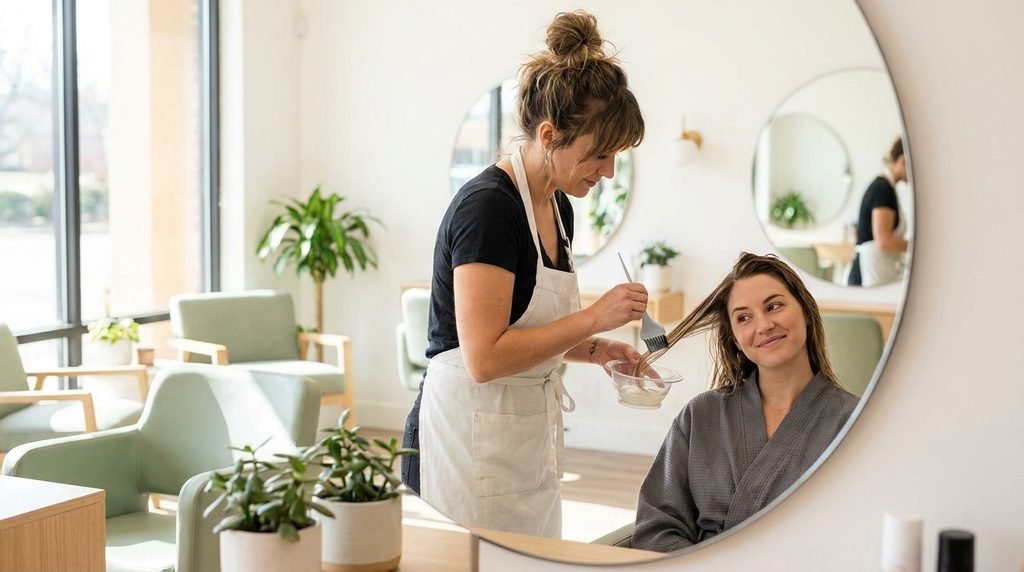
You have been consistent at home for six to eight weeks, improvement has stalled, and the ends remain rough while colour still fades early. This is the point where professional strength and a trained pair of hands begin to earn their fee.
Salon Bond Repair Treatment
The same chemistry as the home versions, applied at professional concentration by someone who can read your hair by touch and adjust accordingly. The genuine advantage is sequencing. A bond treatment worked into a lightening or colour service protects the structure while it is under chemical stress, which is considerably more effective than repairing the aftermath. Booked as an add-on it costs little. Booked alone it costs more, and is worth it only for hair that is measurably weakened.
Hair Gloss Treatment And Tone Refresh
Consistently the best visual return for the money in this entire guide. A gloss is a low-commitment, semi-permanent service that seals the cuticle, neutralises unwanted warmth and produces that liquid, light-reflecting finish. It repairs nothing structurally, and it does not pretend to. What it does is make compromised hair look markedly healthier while the slower repair work continues underneath, and it is mild enough to repeat every six to eight weeks in almost any market.
Scalp Spa Treatment And Ritual Cleansing
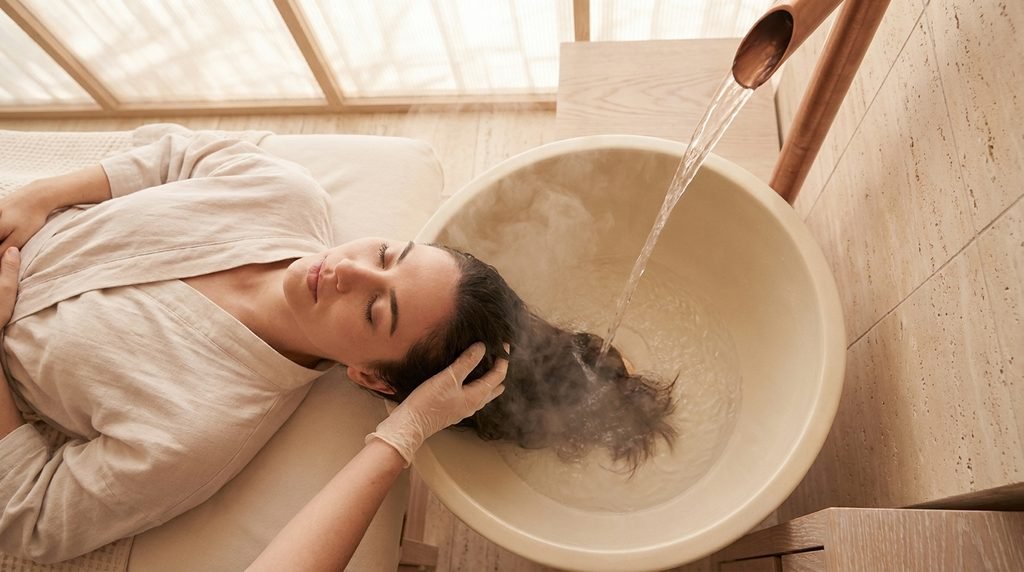
Extended scalp services have moved onto salon menus almost everywhere, and they are frequently misunderstood. A typical treatment involves a thorough double cleanse, gentle exfoliation, warmth or steam to soften the skin, a long pressure-point massage across the scalp, neck and shoulders, then conditioning and a finish.
What it delivers honestly: a genuinely clean scalp, residue and mineral deposits lifted, better circulation, and an hour of real physical relief. What it does not deliver is repair to hair that is already broken further down the length. Book it for scalp condition and for the quality of the hair you have not grown yet — not as a rescue for breakage. Judged on those terms it is worth every unit of currency.
Heat-Assisted Deep Conditioning
Unfashionable and extremely effective. Controlled warmth and steam encourage the cuticle to open just enough for a concentrated treatment to reach the cortex instead of resting on the surface. For coarse, tightly coiled or high-porosity hair in particular, this outperforms services costing several times more.
Tier 2 action list:
- Add bond protection to every colour appointment as a standing rule
- Book a gloss between colour services rather than re-colouring early
- Use scalp services for scalp health, not as damage repair
- Ask for a micro-trim that removes split ends without sacrificing length
- Push the interval between lightening sessions out to ten or twelve weeks
- Tell your stylist your climate and water situation — it changes their recommendation
Tier 3: Advanced — Restructuring For Severely Damaged Hair
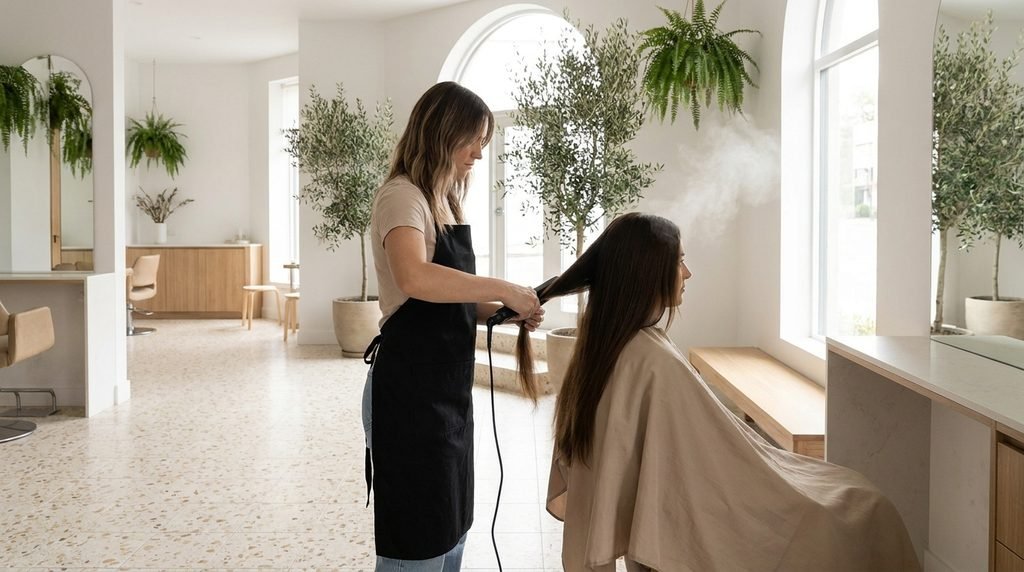
Stretchy, spongy hair. Hair that snaps under a comb. Repeatedly lightened hair, or hair carrying both colour and chemical straightening. There is real risk at this tier, and a wrong decision here causes losses that cannot be undone.
Keratin Smoothing Treatment And Gentler Alternatives
Smoothing services coat and partially reorganise the outer structure, sealing the cuticle and suppressing frizz for anything from a couple of months to most of a year. In humid climates the transformation can be dramatic, which is exactly why demand for these services is highest in tropical and monsoon regions.
The caveat matters. These treatments smooth rather than repair, and most require sealing at high temperature. On hair already weakened by lightening, that heat can be the final insult. Ask for a strand test on a hidden section and wait for the result. Any professional unwilling to do one has told you something useful about their standards.
Amino Acid And Restructuring Services
A softer family of treatments built on amino acids or cysteine derivatives and sealed at lower temperatures. The effect is subtler and fades sooner, but the risk profile suits fragile hair far better. If your elasticity check came back stretchy and slack, this is almost always the correct choice over a full high-heat smoothing service.
The Rescue Plan For Bleached, Damaged Hair
When damage is severe, sequence matters more than product selection. Attempt everything at once and you will lose length.
- Weeks 1–2: stop all chemical services and all hot tools completely
- Weeks 2–4: alternate strengthening and moisturising treatments; never apply both in the same wash
- Week 4: a professional consultation and an honest structural trim
- Weeks 4–8: in-salon bond repair, spaced roughly a fortnight apart
- Week 8 onward: only now consider smoothing or restructuring, and only after a strand test
Best Luxury Hair Treatments For Damaged Hair: Tier Comparison
Costs below are broad USD-equivalent bands. Salon pricing varies enormously between countries and even between neighbourhoods, so treat these as relative proportions rather than absolute figures.
| Tier | Damage Level | Core Treatments | Approx. Spend | Time To Visible Result |
|---|---|---|---|---|
| 1 — Beginner | Mild: dullness, frizz, rough ends | At-home bond repair, weekly mask, sealing oil, heat protection | $50–$150 to set up | 3–6 weeks |
| 2 — Intermediate | Moderate: breakage, rapid colour fade, progress stalled at home | Salon bond repair, gloss, scalp spa, heat-assisted conditioning | $60–$250 per visit | Cosmetic immediately, structural at 6–8 weeks |
| 3 — Advanced | Severe: stretchy, spongy, heavily lightened | Keratin or amino acid smoothing, staged restructuring | $200–$600+ per service | Immediate, but must be staged |
What Luxury Actually Buys You — And What It Doesn’t
| ✅ Do | ❌ Don’t |
|---|---|
| Match the treatment to the damage type you diagnosed | Default to whatever costs the most |
| Commit to one system for at least six weeks | Cycle through five brands in a month |
| Insist on a strand test before any smoothing service | Book smoothing onto freshly lightened hair |
| Remove damaged ends before investing in repair | Expect any formula to seal a split end |
| Alternate strengthening and moisturising treatments | Stack protein treatments back to back |
| Protect the hair during chemical services, not only after | Treat repair as a one-time purchase |
Premium pricing buys three real things: higher concentrations of active ingredients, a better experience, and access to professional judgement. It does not buy a shortcut. Hair above the scalp contains no living cells and cannot mend itself, so every treatment is either temporary structural reinforcement or a cosmetic improvement. Both are legitimate outcomes. Neither is permanent, and anyone promising otherwise is selling.
Your 30-Day Action Plan
- Day 1 — Run the elasticity, porosity and friction checks. Write down your tier.
- Day 2 — Book a trim. Remove what cannot be recovered before spending on what can.
- Day 3 — Buy exactly two products: one bond repair treatment and one heat protectant.
- Week 1 — Establish a fixed weekly treatment day and protect it.
- Week 2 — Halve your heat-styling frequency and lower the temperature.
- Week 3 — Reassess. Shinier but still snapping? That is your signal to move to Tier 2.
- Week 4 — Photograph the same section in the same light as Day 1 and compare properly.
Also Read: Best Designer Bags for Professional Women: Prices and Picks
Frequently Asked Questions
How long does it take to repair damaged hair?]
Cosmetic changes — shine, softness, easier detangling — usually show after one to three treatments. Structural improvement needs six to eight weeks of consistency. Severely damaged hair is managed rather than restored, and complete recovery generally depends on growing out and gradually trimming away the worst length.
Can damaged hair be permanently repaired?
No. The hair above your scalp contains no living cells and has no capacity to heal. Bond treatments create genuine internal reinforcement, but washing, heat and further chemical processing steadily erode it, which is why maintenance matters more than any single dramatic appointment.
Is it better to cut damaged hair or treat it?
Both, in that sequence. A split travels upward along the strand and cannot be permanently rejoined, so removing it first prevents the damage spreading and makes everything you apply afterwards more effective.
How often should you use a bond repair treatment?
Weekly for most people, twice weekly for lightened or heavily processed hair. Overdoing it is a real risk — too much protein leaves strands rigid and brittle, producing exactly the breakage you were trying to stop.
Do salon treatments work better than at-home ones?
Frequently yes, for two reasons: stronger formulations and accurate diagnosis. But a service used once a quarter loses to a decent home routine used every week. In this category, consistency beats potency.
Does climate affect which treatment I should choose?
Considerably. Humid regions benefit most from smoothing and anti-frizz services. Dry or high-altitude climates need moisture and lipid replacement. Hard-water areas need regular chelating washes, and heavy sun or chlorine exposure calls for ultraviolet protection and post-swim rinsing.
1 thought on “Best Luxury Hair Treatments for Damaged Hair: 2026 Guide”
Comments are closed.