Best Designer Bags for Professional Women: Prices and Picks
Key Takeaways
- The middle of the market has quietly become the smartest place to buy. Roughly $400 to $900 now delivers most of the material quality of the heritage houses without the logo premium.
- Fit is decided by interior dimensions, never by the model name. The same design usually exists in three or four sizes and only the largest one takes a laptop.
- Empty weight is the specification that determines whether you still carry the bag in year two. Under about 1.2kg for anything you use daily.
- Resale value is real but narrow. A handful of scarce models hold or gain; almost everything else loses value gradually, which is normal and not a reason to avoid buying.
- Neutral colours — black, tan, navy, deep brown — outlast trend shades in both wardrobe use and second-hand demand.
What Changed In The Work Bag Market
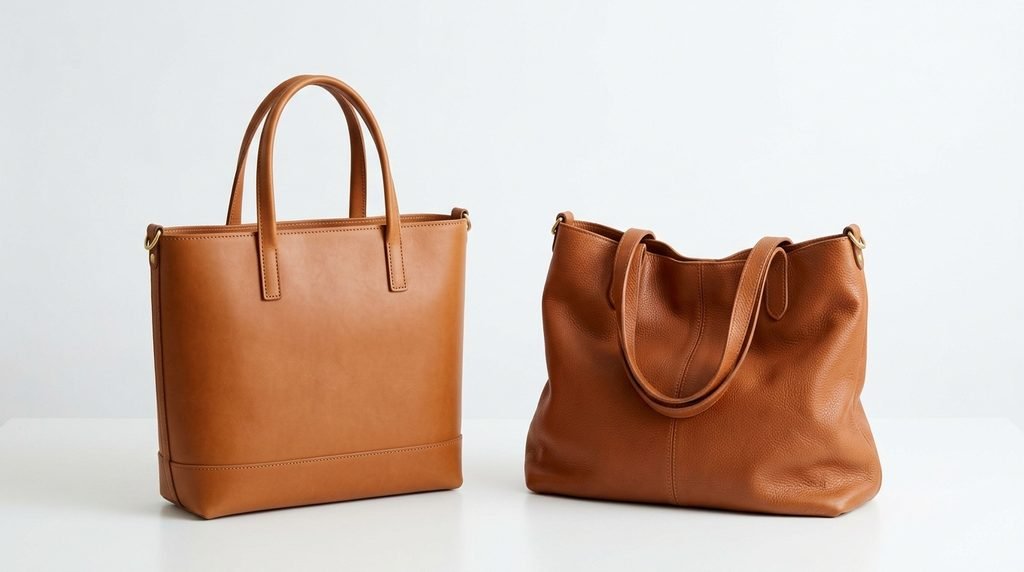
For most of the last decade, the professional bag followed one template: rigid, rectangular, unmistakably formal, and built to look serious sitting on a boardroom table. It was armour as much as accessory.
That template is loosening. Hybrid working reshaped what a bag has to do in a single day — a laptop in the morning, a laptop-free client lunch, an evening that was not on the calendar when you left the house. A bag designed exclusively for a desk-bound nine-to-five now solves a working pattern that fewer people actually have.
At the same time, a generation of contemporary European and Asian labels grew up. They buy from the same tanneries and factories that supply the famous houses, spend almost nothing on advertising, and pass a large part of that saving on. The result is that the quality gap between a $600 bag and a $2,500 bag has narrowed considerably, while the price gap has not.
None of that makes heritage luxury a poor choice. It does mean the old advice — save until you can afford one very expensive tote, then carry it forever — is no longer automatically the best plan for a working wardrobe.
The Short Answer
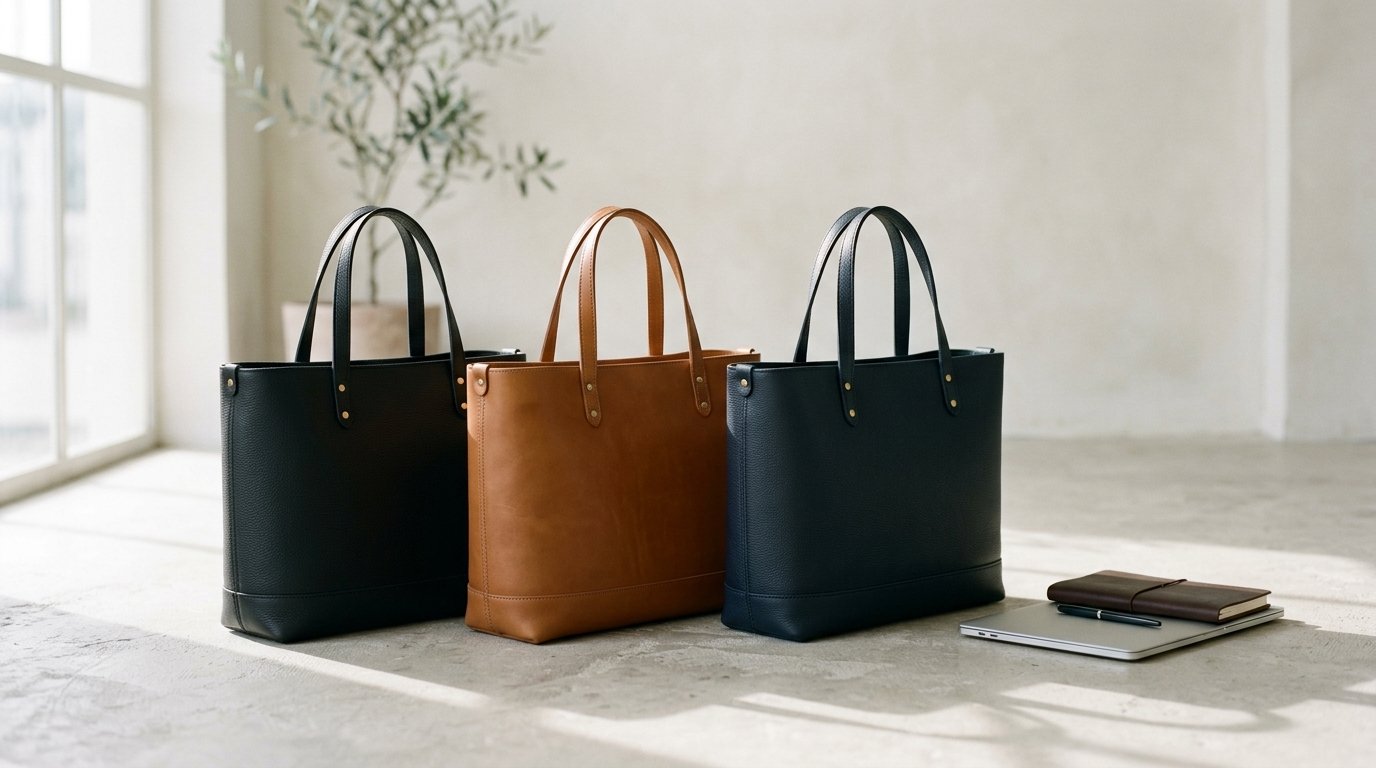
The best designer bags for professional women are structured leather totes in the $400 to $2,500 range that take a 14-inch laptop, weigh under about 1.2kg empty, and come in a neutral colour. Contemporary labels win on value for money; established heritage houses win on recognition and resale liquidity.
By The Numbers
- +2cm — the clearance you should add to each dimension of your closed laptop before you accept any bag as a fit
- 1.2kg — a sensible empty-weight ceiling for a bag carried five days a week
- 4 sizes — how many versions a single popular tote design often comes in, of which usually one is genuinely laptop-capable
- 3 years — the honest minimum lifespan to divide a price by before calling anything an investment
- 4 colours — black, tan, navy and deep brown, which between them cover almost every professional wardrobe and every resale market
The Four Price Tiers Of Designer Work Bags
Prices below are broad international approximations in US dollars. Local pricing, duties and tax treatment vary widely, so treat these as bands rather than quotes.
| Tier | Typical Band | What Defines It | What You Actually Gain | Best Suited To |
|---|---|---|---|---|
| Accessible contemporary | $120–$400 | Corrected-grain leather or heavy coated canvas, mass manufacture | Reliable function, low anxiety, easily replaced | A first professional bag, or a punishing daily commute |
| Contemporary luxury | $400–$900 | Full-grain or calf leather, small-batch European or specialist manufacture, minimal branding | Genuine material quality, distinctive design, repair services | Most working women, most of the time |
| Entry heritage luxury | $1,200–$2,800 | Recognisable house design codes, hardware and lining quality, established resale market | Recognition, longevity, real second-hand liquidity | Client-facing roles and buyers who care about resale |
| Icon tier | $3,500 upward | Scarcity, waiting lists, decades of cultural weight | Status, and in rare cases value retention | Collectors, or buyers treating the purchase as an asset |
How To Read The Tier Table
The most common assumption about this table is that each step up buys better daily performance. It generally does not.
Moving from tier one to tier two buys real material improvement, and you can feel it within a month. Full-grain leather develops a patina instead of peeling. Stitching holds. Handles do not stretch and fray. Interiors are cut for a laptop rather than around one.
Moving from tier two to tier three buys something different: a name the second-hand market already understands how to price, plus a level of finishing that most people notice more in photographs than in use. That is a legitimate thing to want. It is simply not a functional upgrade, and it helps to be clear-eyed about which one you are paying for.
Tier four is a separate conversation entirely, closer to collecting than to shopping. Bags in that band are usually bought for reasons that have very little to do with carrying a laptop to a meeting.
Which Designer Laptop Totes Actually Fit A 14-Inch Machine
This is where most disappointed purchases happen. The table below is organised by bag format, because formats behave consistently across brands and countries in a way model names do not.
| Format | Typical Band | 13″ | 14″ | 15–16″ | Notes |
|---|---|---|---|---|---|
| Wide flat shopper tote | $400–$900 | Yes | Yes | Often | The most reliable laptop format. Wider than it is deep, flat base, generous opening. |
| Structured squared tote, large size | $1,200–$2,800 | Yes | Yes | Yes | Holds shape when full, sits upright unaided, survives being set on floors. |
| Purpose-built work tote | $250–$700 | Yes | Yes | Sometimes | Padded laptop sleeve built in, plus organisation most luxury interiors lack. |
| Coated canvas or technical nylon shopper, large | $700–$2,400 | Yes | Yes | Yes | The best choice for wet climates and long commutes. Very light for its capacity. |
| Soft folded or sculptural tote | $500–$900 | Sometimes | Rarely | No | The tapered base and inward-folding sides cut usable space well below the stated dimensions. |
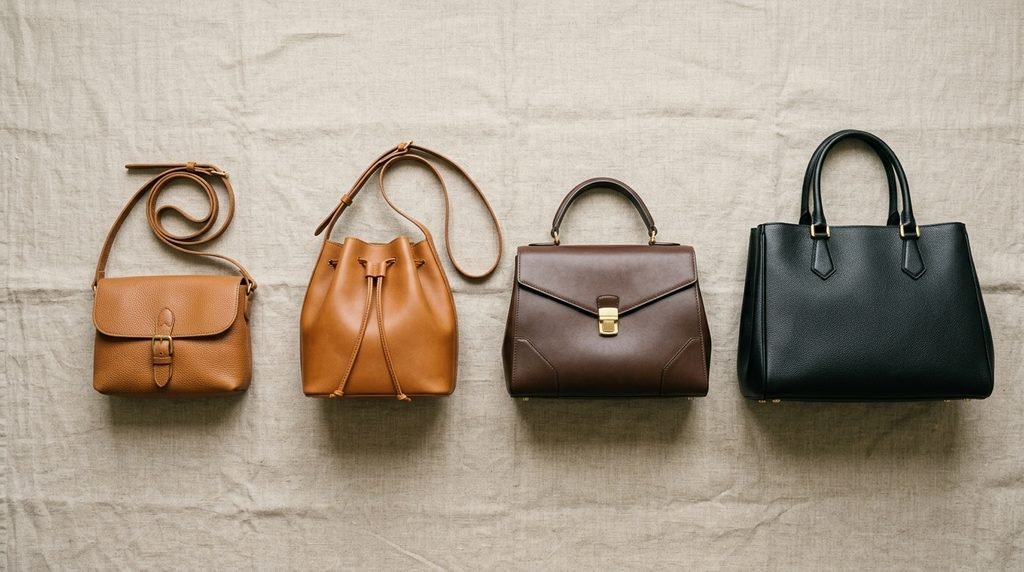
| Bucket or drawstring bag | $500–$2,000 | Rarely | No | No | Deep rather than wide. A laptop sits awkwardly and the shape distorts. |
| Quilted flap or top-handle bag | $2,000 upward | Barely | No | No | Beautiful, and the wrong tool. Treat these as occasional bags, not workhorses. |
The Laptop Fit Problem Most Buyers Discover Too Late
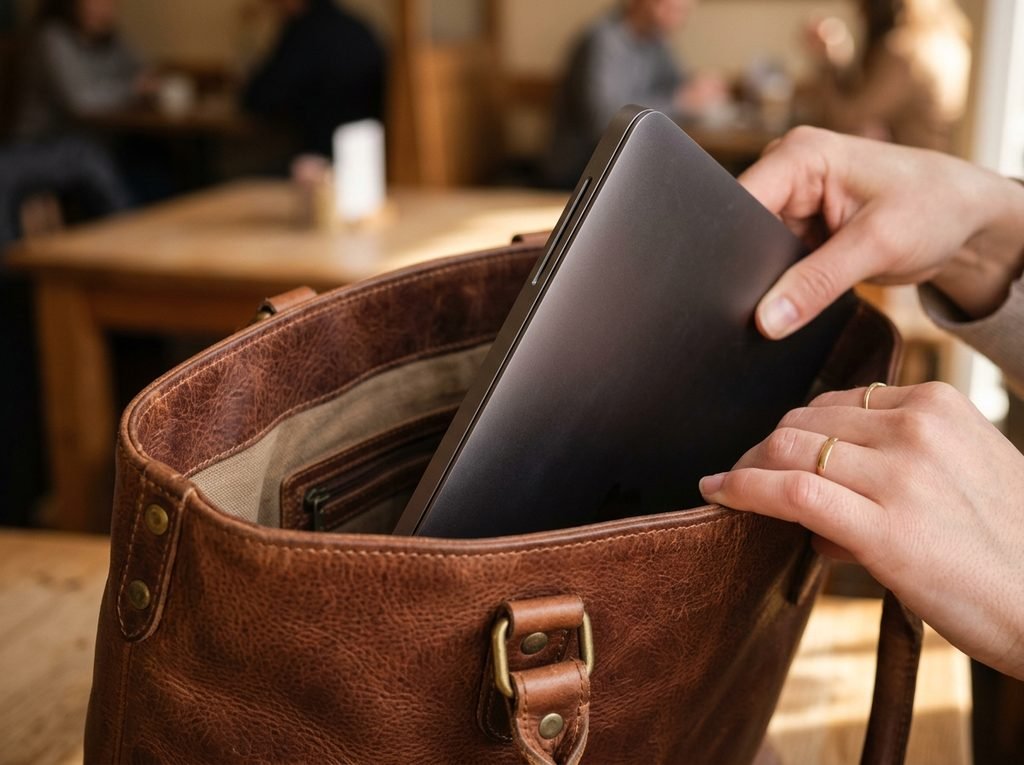
Three traps account for the overwhelming majority of returns in this category.
The size within the size. A design sold as “large” by one label can be smaller than another label’s “medium.” Sizing nomenclature is marketing, not measurement. Always find the interior dimensions, in centimetres, before you decide anything.
The sculptural silhouette. Curved, folded and architectural bags photograph exceptionally well and measure deceptively. If the sides pull inward when the bag is closed, or the base tapers, real capacity is substantially less than the external figures imply.
The unprotected opening. Prestige totes almost never include a padded compartment. If you are putting a laptop into an open-top leather bag, buy a slim sleeve at the same time and treat it as part of the price, not an afterthought.
One rule handles all three: measure your closed laptop, add two centimetres to each dimension, and refuse anything smaller. This is boring and it works.
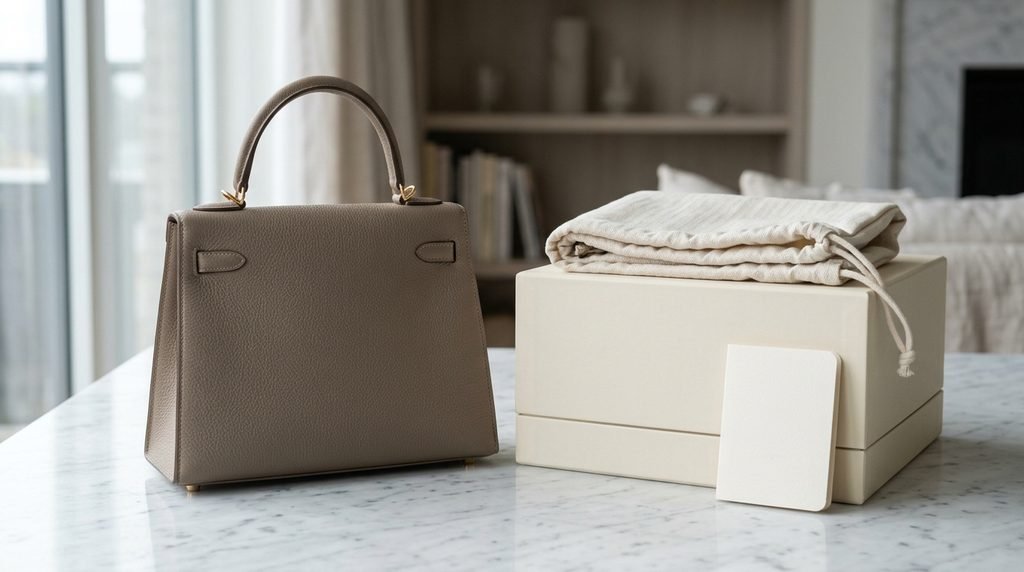
Handbag Resale Value Retention By Category
Precise resale percentages move constantly and differ by market, so the honest way to present this is by behaviour rather than by number.
| Category | Resale Behaviour | Liquidity | Practical Meaning |
|---|---|---|---|
| Scarce icon models from waitlist houses | Can meet or exceed original price | Strong, but slow — buyers are specific | The only genuine appreciation cases, and access is the hard part |
| Long-running signature models from major houses | Retain a substantial share of retail | Very strong — deep buyer pool | The safest resale choice for a bag you also intend to use |
| Seasonal or heavily branded designs | Fall quickly once the season passes | Moderate | Buy because you love it, not because you expect it back |
| Contemporary luxury labels | Modest recovery at best | Thin and improving | Value is in the wearing, not the reselling |
| Accessible contemporary | Effectively none | Negligible | Price it as consumption, which is fine |
What The Resale Numbers Do And Do Not Tell You
Two things get misunderstood constantly here.
First, brand-level averages are misleading because they are pulled upward by a small number of scarce models. A bag from a house famous for appreciation will not behave like its famous bag simply because it shares a logo. Availability is the tell: anything you can buy easily, in any quantity, on any day, is not scarce, and scarcity is what drives the exceptional numbers people quote.
Second, when a house raises retail prices year after year, the second-hand market rises behind it. That looks like your bag appreciating. It is really the replacement cost climbing. The distinction matters, because it means the mechanism depends entirely on the house continuing to raise prices — a business decision, not a law of nature.
Three factors reliably help resale regardless of brand: neutral colour, classic silhouette over seasonal novelty, and complete original packaging with documentation. Keep the box, the dust bag and the receipt from day one. It costs you shelf space and returns real money.
And the baseline nobody enjoys stating: most designer bags lose value. That is the normal outcome. Buy something you will genuinely carry, and let any recovered value be a pleasant surprise rather than the plan.
Material Versus The Real Commute
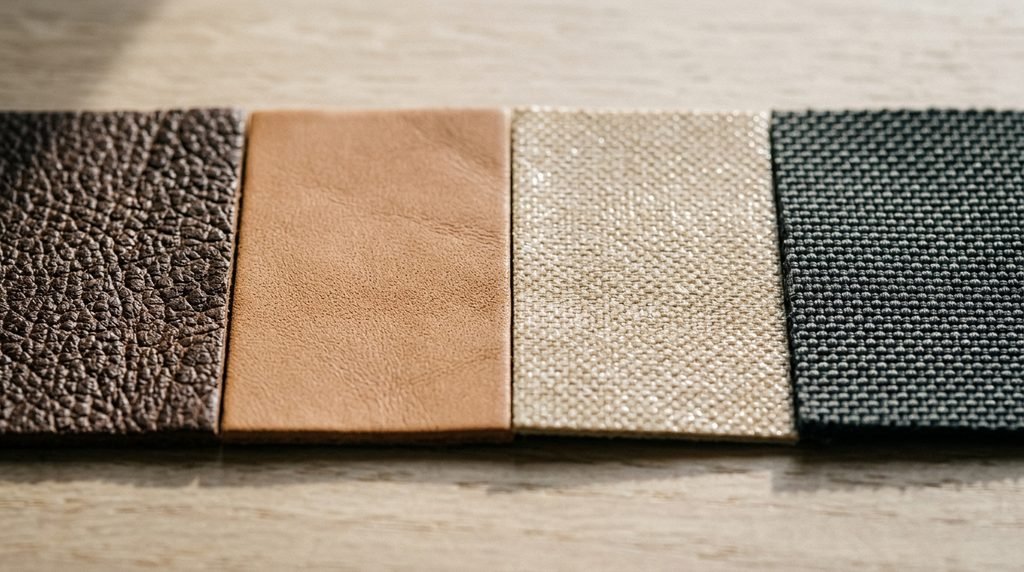
Working conditions differ enormously between a humid tropical city, a rainy Northern European winter and a dry Gulf summer. Material choice should follow climate at least as closely as it follows taste.
| Material | Daily Durability | Wet Weather | Heat And Humidity | Upkeep | Verdict For Work |
|---|---|---|---|---|---|
| Textured or pebbled full-grain leather | Excellent | Fair — dries acceptably | Good | Occasional conditioning | The best all-round choice; grain disguises minor scuffing |
| Cross-grain structured leather | Excellent | Good | Good | Wipe clean | The most forgiving formal option |
| Smooth calf or lambskin | Fair | Poor — marks and darkens | Fair | Frequent care | Lovely, and a poor five-day-a-week decision |
| Coated canvas | Excellent | Very good | Excellent | Wipe clean | Consistently underrated for daily use |
| Technical nylon | Excellent | Excellent | Excellent | Wipe clean | The right answer in genuinely wet or humid climates |
| Suede and nubuck | Poor | Very poor | Poor | High | Occasional wear only |
| Straw, raffia and open weave | Poor | Poor | Fair | High | Seasonal, not professional daily wear |
| Quality engineered leather alternatives | Good | Good | Good | Wipe clean | The better modern versions genuinely compete for animal-free buyers |
Whatever you choose, the same handful of enemies apply everywhere: standing water, direct heat, oils and cosmetics, perfume sprayed too close, chronic overfilling, and colour transfer from new dark clothing. Pale leather against dark denim is the single most common avoidable damage in this category.
Choosing The Best Designer Bags For Professional Women By Job Type

Tables narrow the field. Your actual working week makes the decision.
If you commute long distances on foot or public transport. Weight is your first filter, not aesthetics. Look for wide flat shoulder straps that distribute load, a reinforced flat base, and a structure that stays upright when you set it down. Delicate handles and thin straps fail first, and they fail expensively.
If you are in law, finance, consulting or any strongly client-facing role. Structure carries meaning here. A squared, upright tote in a neutral leather reads as prepared in a way a slouchy bag does not, and it survives being placed on floors, trolleys and conference tables without collapsing.
If your day runs from meetings into dinner. This is where the softer contemporary silhouettes justify themselves. The target is a clean shape, minimal external branding, and a material that still looks considered under warm evening lighting rather than office fluorescents.
If you travel between cities regularly. Prioritise a trolley sleeve or a bag that sits stably on a suitcase handle, a zip closure rather than a magnet, and a material that tolerates being handled by other people.
If you rarely carry a laptop. Stop shopping totes altogether. A structured medium shoulder bag costs less, weighs less, and looks far more deliberate than a large bag carried half empty.
If this is your first purchase above roughly $500. Buy in the contemporary luxury tier, choose black or tan, and take the size above the one you think you need. Almost nobody regrets slightly too much capacity. Plenty of people regret slightly too little.
The Cost Per Wear Math
This calculation takes about fifteen seconds and reframes the entire category.
Divide the price by the number of days you will realistically carry the bag over three years. A $700 tote used four days a week for three years works out at a little over $1.10 per use. A $4,000 bag carried once a week across the same period sits near $25.60 per use — and a fragile bag carried rarely tends to become a bag carried never, which quietly makes the real figure worse.
Now bring resale into it. Suppose a $2,000 bag from a well-established house recovers a meaningful share of its price after three careful years. Its true cost of ownership can land below that of a $700 bag that recovers nothing at all. On that arithmetic, the more expensive bag can genuinely be the cheaper one.
But notice how many conditions that conclusion rests on. You have to actually sell it. You have to have kept the packaging. You have to have looked after it. And the market for that model has to still want it.
Those conditions are real, which is why resale should inform the decision rather than justify it after the fact.
Five Mistakes That Ruin A Luxury Work Bag Purchase
- Buying the name instead of the measurements. Interior dimensions, every time, before anything else.
- Ignoring empty weight. It is the specification most likely to end the relationship.
- Choosing a seasonal colour for a five-day bag. It dates faster than the leather wears.
- Throwing away the box, dust bag and paperwork. Complete presentation measurably improves what you recover later.
- Treating an open leather tote as laptop protection. Add a padded sleeve immediately, not after the first scratch.
Also Read: Best Premium Clothing Brands For Women (2026 Guide)
Where To Verify Before You Buy — And What This Guide Cannot Tell You
A guide like this can give you a framework. It cannot give you certainty, and it is worth being direct about the limits.
Every price band here is a broad international approximation. Luxury pricing is adjusted regularly and differs sharply between markets once duties, sales tax and local margins are applied. A bag that looks like a bargain abroad frequently is not once import charges and return shipping are counted. Price it in your own market first, and factor in what returning it would cost if it does not fit.
Resale behaviour is a pattern, not a promise. No one can guarantee what any bag will be worth in five years, and nothing in this article should be read as financial advice. A handbag’s first job is to carry your things well.
Before committing, confirm three things directly with the brand — through its own customer service, a boutique or an authorised stockist: exact interior dimensions, empty weight, and the repair and warranty terms in your country, since aftercare provisions often differ by region. If you are buying second-hand, have the bag authenticated before money changes hands. There is no acceptable shortcut on that step, and the pre-owned market’s genuine advantages only exist if you take it seriously.
Then buy the one you will reach for on an ordinary Tuesday. Everything else in this article is secondary to that.
FAQ
How much should a professional woman spend on a work bag?
For most people, the $400 to $900 band is the value ceiling worth clearing. It buys genuine full-grain leather, considered interiors and real repair support. Beyond it, you are largely paying for recognition and resale liquidity rather than better daily performance.
Are designer bags a good financial investment?
Usually not. A small group of scarce models from waitlist houses can hold or exceed their price, but the large majority of designer bags depreciate steadily. Buy for use, and treat any recovered value as a bonus.
Which colour is best for a professional bag?
Black is the most versatile and the most stable second-hand. Tan, navy and deep brown follow closely, and between them they suit almost every professional wardrobe without tying you to a season.
Is real leather worth it if I carry the bag every day?
For daily use, yes. Full-grain leather holds structure, ages into something better looking, and tolerates years of handling. That said, the better engineered alternatives have improved considerably and are a reasonable choice if you prefer animal-free materials.
Can a crossbody bag work as a professional bag?
Comfortably, if you do not carry a laptop or large documents daily. Hands-free carrying suits commuting, and a well-made structured crossbody reads as polished as any tote.
Should I buy new or pre-owned?
Pre-owned offers better value and access to discontinued sizes, provided you authenticate before paying. Buy new when resale matters most to you, since documented, complete sets consistently perform better later.
1 thought on “Best Designer Bags for Professional Women: Prices and Picks”
Comments are closed.