Best Luxury Perfumes for Women: What Actually Justifies the Price in 2026
The way women buy fragrance has quietly changed, and most buying guides haven’t caught up. A decade ago the path was simple: walk to a department store counter, smell three famous bottles, pick the one your mother approved of. Now the same shopper arrives already knowing what an extrait is, having tried four samples at home, and carrying a shortlist that mixes a century-old French house with a small perfumer she found through a friend.
That shift matters, because it changed what a good recommendation looks like. Naming ten expensive bottles is easy. Telling someone which of those bottles belongs on her particular skin, in her particular climate, for her particular reason — that is the harder job, and it is the one worth doing.
So this guide sorts the reader before it sorts the perfume.
Quick Answer
The best luxury perfumes for women depend on the type of buyer. A first bottle should be versatile and forgiving, like Chanel Coco Mademoiselle or Dior Miss Dior. A signature scent should be distinctive, like Frédéric Malle Portrait of a Lady. Collectors move toward Amouage and Xerjoff. For longevity, buy extrait concentration.
Before You Spend Anything: The Five-Box Check
Two minutes here will save you a great deal of money later. Work through all five before any bottle goes into a basket.
- Can I name the scent family I actually enjoy — floral, gourmand, woody, fresh or oriental?
- Have I worn this on my own skin for a full afternoon, rather than sniffing a paper strip?
- Do I understand which concentration I’m buying, and what that means for how long it lasts?
- Am I clear whether this is for daily wear, evenings, or a gift? Those rarely point to the same bottle.
- Can I try a small decant or sample before committing to a full-size purchase?
The last box is the one most people skip and later regret. A full bottle of luxury fragrance is a substantial bet placed on ten minutes of information. A decant turns that bet into an informed decision for a fraction of the cost.
What the Price Actually Buys You
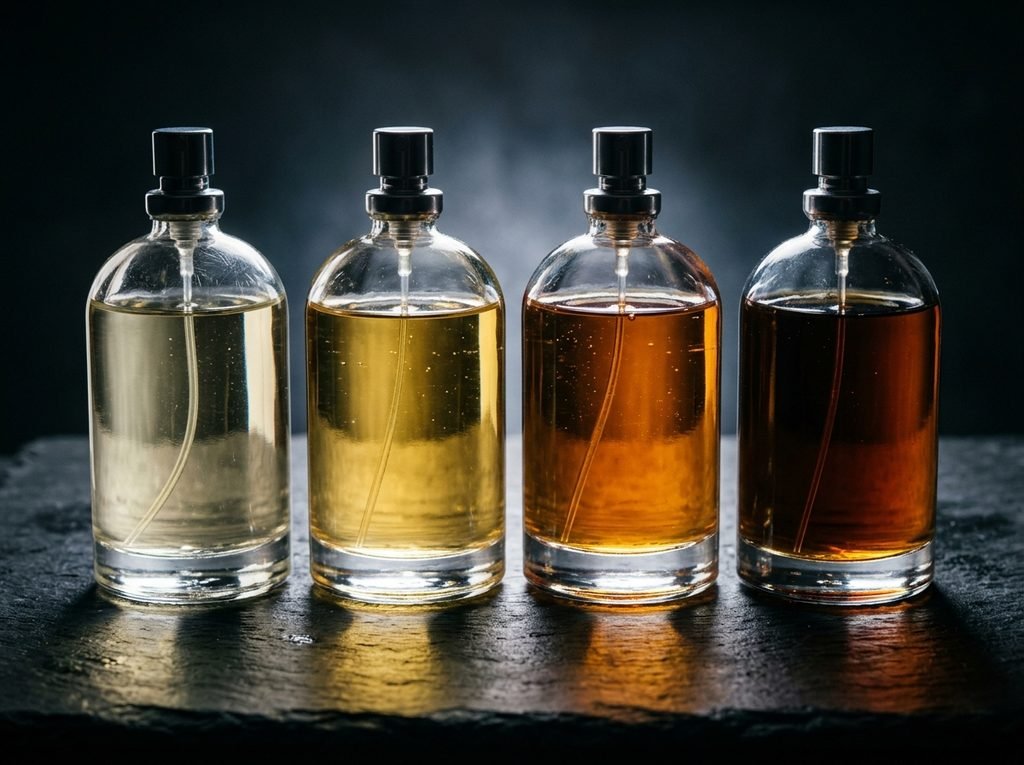
There is genuine value inside a luxury fragrance price, and there is also marketing. Separating the two is straightforward once you know what to look at.
Concentration. This is the proportion of perfume oil suspended in the alcohol base, and it decides how long the scent survives on skin.
| Type | Typical oil concentration | Realistic wear time |
|---|---|---|
| Eau de Cologne | 2–5% | 2–3 hours |
| Eau de Toilette (EDT) | 5–15% | 3–5 hours |
| Eau de Parfum (EDP) | 15–20% | 6–9 hours |
| Extrait / Parfum | 20–40% | 10–24 hours |
The eau de parfum vs extrait de parfum question comes up in almost every fragrance conversation, and the practical answer is this. Extrait costs noticeably more per millilitre, sits closer to the skin, and lasts roughly twice as long. If you currently reapply at lunchtime every day, extrait may work out cheaper over the life of the bottle, not more expensive.
Materials. Certain natural ingredients are simply costly to produce. Iris root has to be dried and aged for years before it yields anything usable. Jasmine and tuberose are picked by hand at specific hours. Real oud is slow to form and slower still to harvest. A house building around those materials cannot price like a supermarket brand, and you can usually smell where the money went — natural materials shift and breathe over the wear, while cheaper synthetics tend to hold one flat note until they fade.
Time and freedom. Larger houses and independent perfumers work to different briefs. A mass-market fragrance is usually optimised to please a wide audience within the first thirty seconds. A luxury composition is more often allowed to be strange at the opening and beautiful three hours in. That difference in patience is a real part of what you are paying for.
If You’re Buying Your First Luxury Perfume
Your goal is not the most fascinating bottle on the shelf. It is the bottle you cannot get wrong.
Start with a modern classic from an established house. Chanel Coco Mademoiselle remains the most reliably wearable entry point in the whole category — citrus-bright at the opening, rose and jasmine through the middle, warm patchouli underneath. It suits a meeting, a wedding and an ordinary Thursday equally well. Dior Miss Dior offers a softer, more romantic version of the same idea. Yves Saint Laurent Libre adds a lavender edge for someone who wants a touch of tension in what she wears.
Expect roughly $130 to $200 for a 50ml bottle in most markets.
Your action list:
- Buy 30ml or 50ml first. Nobody’s first luxury purchase should be a 100ml bottle.
- Test in the afternoon rather than first thing — your nose is more reliable and shops are calmer.
- Wear it home and decide the next morning. The first spray is not the fragrance.
- Leave anything described as challenging or divisive for later. There is time.
If You’re Hunting a Signature Scent
A signature scent is a different exercise altogether. You are not looking for something agreeable. You are looking for something that becomes shorthand for you in other people’s memories.
Frédéric Malle Portrait of a Lady is the obvious reference: a dense, unapologetic rose wrapped in patchouli and incense, memorable for years rather than hours. It is not beginner-friendly and it is not quiet. Chanel No. 5 in parfum form still does something no other fragrance manages, provided aldehydes agree with you. Le Labo Santal 33 built its reputation on a dry, smoky sandalwood that reads as neither feminine nor masculine, which is precisely why so many women adopted it.
Expect roughly $250 to $450 at signature tier, in eau de parfum or extrait.
Your action list:
- Live with three finalists for a month. Signature scents should survive boredom.
- Ask two honest people what it smells like on you — not what they think of it in the bottle.
- Favour houses with long, stable histories. You want this still in production in ten years.
- If you fall genuinely hard, buy a backup. Formulas do get revised over time.
If You Already Own Five or More Bottles
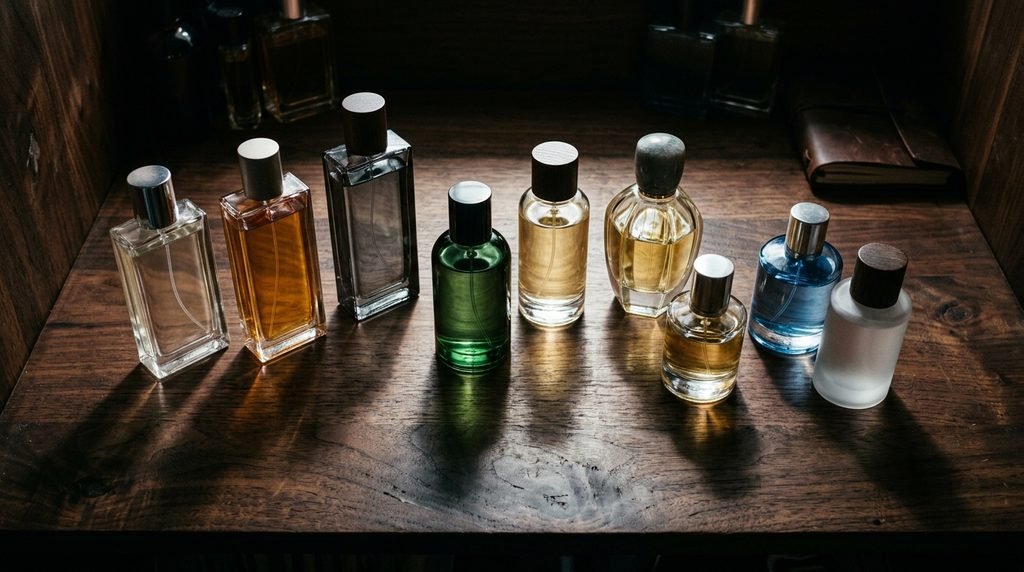
You have passed the point where another crowd-pleaser adds anything. What your shelf is missing is a material or a structure you don’t yet own.
Amouage builds some of the densest, most architectural fragrances made anywhere, leaning on frankincense, rose and heavy florals that reward slow wearing. Xerjoff does opulence without apology or restraint. Maison Francis Kurkdjian Baccarat Rouge 540 has been imitated more than almost any modern fragrance, and the extrait version is worth smelling once even if you don’t buy it. Parfums de Marly Delina covers luminous rose and fruit. For genuinely unfamiliar territory, look at the smaller independent houses where perfumers are working without commercial guardrails.
Expect $300 to $600 and upward.
Your action list:
- Buy by gap, not by hype. Which family is entirely absent from your collection?
- Explore darker gourmands, incense and resinous woods — that is where the most interesting recent work sits.
- Use discovery sets. Even experienced collectors blind-buy badly.
- Store bottles cool, dark and upright. Bathroom heat destroys expensive juice faster than time does.
If You’re Buying It as a Gift
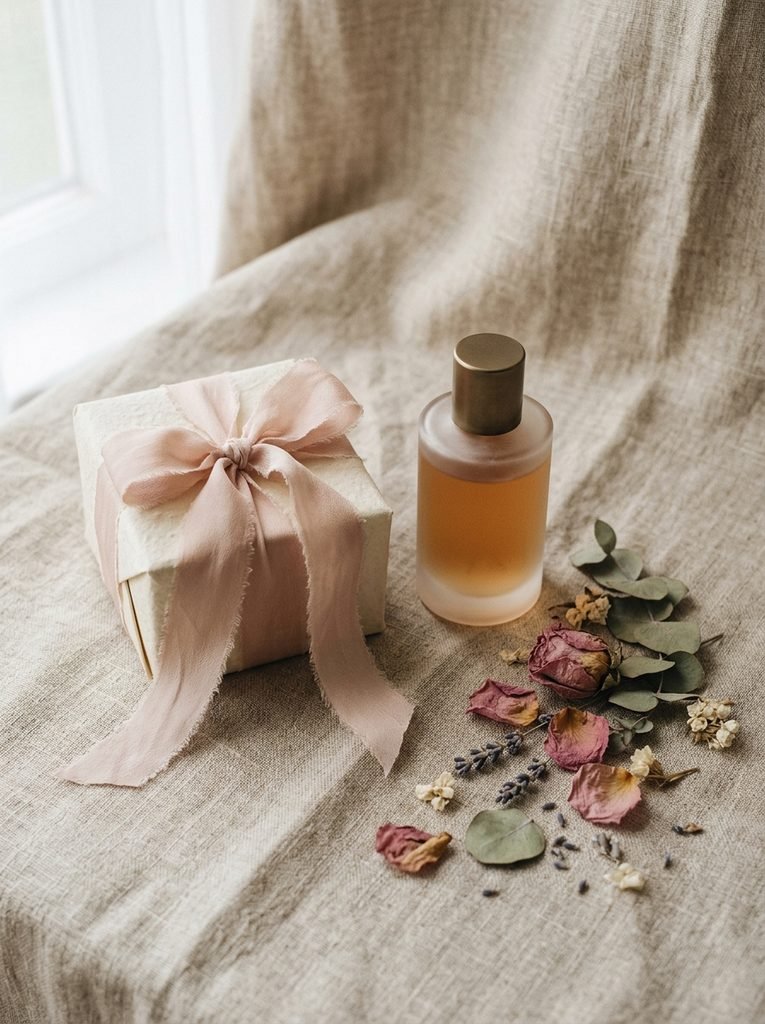
Gifting fragrance is difficult because you are guessing at somebody else’s skin chemistry, and skin chemistry is not negotiable. Reduce the risk on purpose.
Dior J’adore is probably the most consistently well-received luxury fragrance gift in the world — fruity and bright at the top, rich white florals in the middle, warm and soft as it settles. Chanel Chance and Gucci Bloom sit close behind for the same reason. If she already owns the obvious bottles, a well-chosen fragrance from a smaller house signals that you paid attention.
When you genuinely don’t know her taste, buy a discovery set from a house you admire rather than a full bottle. It reads as thoughtful rather than generic, and it hands the final choice back to her.
Do this / Don’t do this
| Do | Don’t |
|---|---|
| Choose an established house with easy exchanges | Surprise her with heavy oud, leather or animalic notes |
| Keep the gift receipt | Translate “she loves roses” directly into rose perfume |
| Pick eau de parfum over eau de toilette | Buy a 100ml bottle of something untested |
| Consider a travel spray and body cream set | Buy whatever is trending that month |
If You Want Maximum Longevity and Projection

This is the search behind “best long-lasting perfume for women”, and the honest answer is structural rather than brand-based. Staying power comes from concentration combined with heavy base notes — resins, ambers, woods, vanilla and musks. Light citrus fragrances will never last eight hours, regardless of price.
Baccarat Rouge 540 Extrait is the usual benchmark and frequently survives until the following morning. Tom Ford Tobacco Vanille is a thick tobacco-and-spice composition best kept for cold weather and generous spaces. Parfums de Marly Delina Exclusif projects strongly through its first hours. Kilian Angels’ Share delivers boozy warmth with real persistence.
Your action list:
- Buy extrait or parfum concentration rather than eau de toilette.
- Apply to moisturised skin. Dry skin releases fragrance far too quickly.
- Use pulse points and one spray on clothing; skip hair, since alcohol dries it out.
- Two sprays of an extrait is usually plenty. Three is often one too many.
If You Live Somewhere Hot — or Need Something Office-Quiet
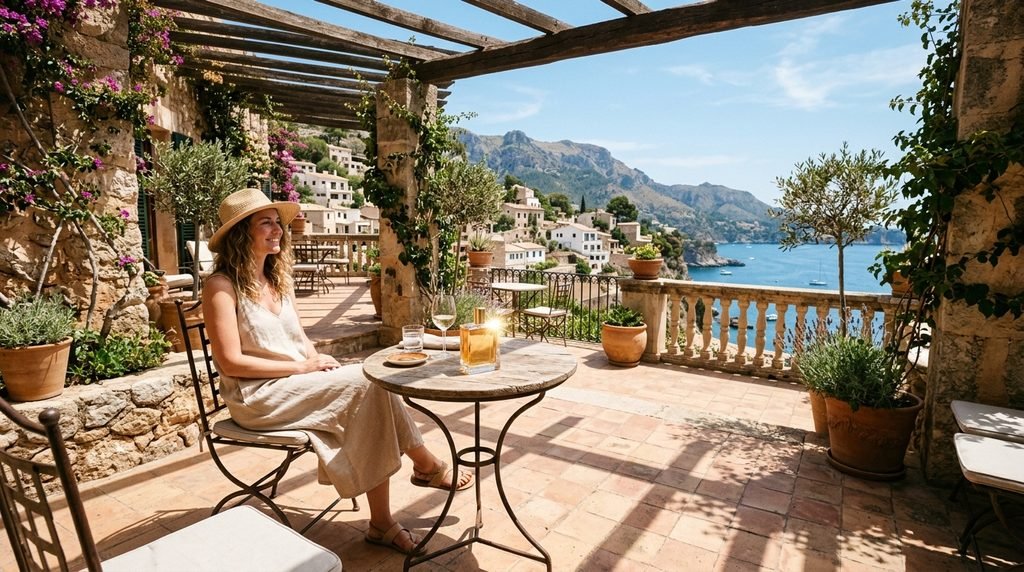
Heat behaves like an amplifier. A fragrance that feels refined in a cool European autumn can become genuinely overwhelming at midday in Lagos, Karachi, Dubai or Jakarta. This is a matter of physics rather than taste, and adjusting for it is not a compromise.
In heat, choose brightness and structure. Neroli, bergamot, petitgrain and clean woods hold their shape when the temperature climbs. Citrus-forward compositions from Italian houses were designed for exactly this. In the Gulf and across South Asia, high-quality oud-based attars and rich resinous compositions work beautifully, partly because that entire tradition was built around warm climates in the first place.
For quiet office wear anywhere in the world, look for what enthusiasts call skin scents: soft musks, creamy sandalwood, translucent florals that stay within arm’s length. They read as expensive precisely because they don’t announce themselves.
Your action list:
- In hot weather, use one spray fewer than your winter habit.
- Choose lighter concentrations for daytime humidity, heavier ones for air-conditioned evenings.
- Reapply midday instead of over-applying in the morning.
- Test office fragrances by asking a colleague whether they notice. If they do from three metres away, reduce it.
Also Read: Best Skincare Products for Women Over 40: What Works
The Price-Per-Wear Reality Check
Consider the arithmetic honestly. A $400 extrait worn twice a week for three years costs somewhere near a dollar and a half per wear. A $90 bottle bought impulsively and abandoned after five wearings costs far more in real terms, and takes up shelf space besides.
That is the genuine argument for luxury fragrance — not exclusivity, and certainly not status. A well-chosen expensive bottle gets worn down to the last few millilitres. The unworn bottle is always the expensive one.
Key Takeaways
- Identify your buyer type before comparing bottles. It matters more than any ranking.
- Concentration drives longevity: extrait outlasts eau de parfum, which outlasts eau de toilette.
- Samples and decants are the correct way to test anything above $150.
- Independent and niche houses are where the least predictable work is happening now.
- Climate changes everything. Adjust concentration and application by temperature.
- Judge cost by price per wear rather than by the number on the box.
Your Action Plan
- Name your scent family: floral, gourmand, woody, fresh or oriental.
- Order three samples spread across two families and wear each for a full day.
- Narrow to two, then test both in the setting where you’ll actually wear them.
- Buy the smaller bottle of the winner, in the highest concentration you can justify.
- Wear it for a month before buying anything else.
FAQ
Are expensive perfumes actually worth it?
For regular wearers, usually yes, though for practical reasons rather than prestige ones. Higher concentration means fewer reapplications, better raw materials mean the scent evolves over hours instead of flattening out, and a considered composition holds interest far longer. If a bottle gets finished, it earned its price.
What is the difference between niche and designer perfume?
Designer fragrances come from fashion houses and are built to appeal broadly across enormous distribution. Niche fragrances come from dedicated perfume houses working at smaller scale with larger material budgets and fewer commercial constraints. Niche is not automatically better — it is less compromised, which sometimes means less immediately likeable.
How many sprays of luxury perfume should I use?
Two to four for eau de parfum, one to two for extrait. Apply to warm pulse points such as wrists, the base of the throat and behind the ears. Avoid rubbing your wrists together, which crushes the delicate opening notes before they have a chance to develop.
How long does a bottle of perfume last before it goes off?
Sealed and stored somewhere cool and dark, most bottles hold up for three to five years. Once opened, expect two to three years of reliable quality. Citrus-heavy fragrances turn first. Heavy ambers, resins and orientals often deepen slightly with age.
What is the best luxury perfume for a woman over 50?
Age is a poor filter for fragrance, since skin chemistry and personal taste decide far more than birth year does. That said, compositions with genuine depth tend to be rewarding — aldehydic florals, chypres, iris-based scents and refined orientals wear beautifully and never feel like trend-chasing.
Can I wear one luxury perfume all year round?
You can, though most people find heavy sweet or amber fragrances uncomfortable in summer and light citrus scents thin in winter. A simple two-bottle rotation — one warm, one bright — covers the entire year without needing a collection.
1 thought on “Best Luxury Perfumes for Women: What Justifies the Price”
Comments are closed.