Morning vs Night Skincare: The Order Most People Get Wrong
Sunscreen is tested in laboratories at a dose almost nobody applies in real life. Somewhere between a quarter and a half of that amount is what actually reaches most faces on a normal weekday morning, which means a bottle labelled SPF 50 is frequently delivering protection closer to a fraction of what the packaging promises. The number on the label is a statement about a quantity, not about a product.
Sit with that for a moment, because it exposes something strange about how skincare gets discussed. The step carrying the heaviest measurable consequence is being quietly undermined by how much of it goes on — and yet almost every conversation online is about what order things go in.
That gap is the entire subject of Morning vs Night Skincare: The Order Most People Get Wrong. The mistakes are rarely dramatic. Very few people moisturise before cleansing. What actually happens is subtler: a handful of half-true rules get repeated until they feel like physics, and then years of habit get built on top of them.
Morning vs Night Skincare: The Order Most People Get Wrong, Answered in 40 Seconds
Morning: cleanse, apply your lightest treatment, moisturise, finish with sunscreen. Night: cleanse thoroughly, apply one active treatment to dry skin, moisturise, then seal if your skin still feels tight. The sequence barely changes. What changes is purpose — daytime is defensive, night-time is restorative. Most errors come from ignoring that distinction, not from misordering bottles.
Everything below removes a belief that gets in the way of it.
Myth: Your AM and PM routine should use the same products
Fact: The steps rhyme. The products should not.
It is an easy assumption, because on paper the skeleton looks identical. Clean, treat, moisturise. Same three moves, twice a day.
But the two windows are doing opposite work. During waking hours your skin absorbs an unbroken sequence of small insults — ultraviolet radiation, particulate pollution, wind, air conditioning, cooking smoke, dust. The morning routine exists to shrink that daily damage load before it accumulates. Antioxidants and sunscreen are not treatments in the usual sense. They are pre-emptive.
Overnight, that exposure stops. Cell turnover carries on, the barrier loses more water than it does by day, and nothing is competing for your skin’s attention. That is when a treatment with genuine biological ambition — a retinoid, a targeted acid, a repair-focused cream — has its clearest run.
Push identical products through both windows and you get the benefit of neither. The protective hours pass without protection, and the restorative hours pass without repair.
Myth: “Thinnest to thickest” is the only skincare routine order rule you need
Fact: It is a useful shortcut, not a governing principle.
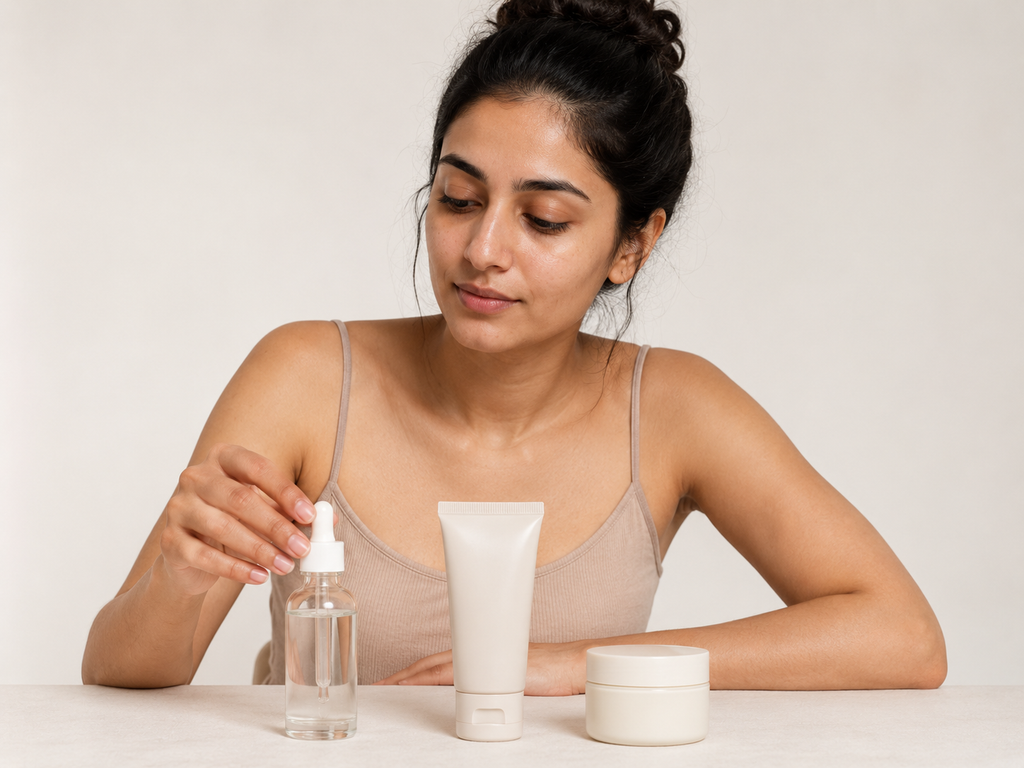
The heuristic exists for good reason. Watery formulas absorb fast and leave the surface receptive. Heavy creams and balms form films that later products struggle to cross. Apply in reverse and an expensive serum mostly sits on top of a moisturiser, doing very little except costing money.
Texture alone will still mislead you in at least three places.
Plenty of modern sunscreens are thin — some as fluid as an essence — and they still belong at the end of the morning. Facial oil is often lighter than a rich night cream and still goes after it, because an oil’s job is to seal rather than penetrate. And retinoids behave best on completely dry skin, which breaks the general assumption that dampness helps everything absorb.
The order is not a ritual. It is a delivery system — and most people are polishing the half that matters least.
A more honest version of the rule: water before oil, treatment before barrier, protection above everything. Texture is a clue, not the law.
Myth: Sunscreen has to go on before moisturiser to work
Fact: Position is flexible. Quantity is not.
This argument recurs endlessly and deserves far less energy than it gets. Both camps have a logic you can follow. Organic filters need to sit within the upper layers of skin to function, which argues for applying them before a cream. Mineral filters work by sitting on the surface, which argues for applying them last.
Moisturiser or sunscreen first?
For almost everyone, the practical default is moisturiser first and sunscreen last. It gives you an unbroken film, avoids diluting the filter, and removes one decision from a rushed morning.
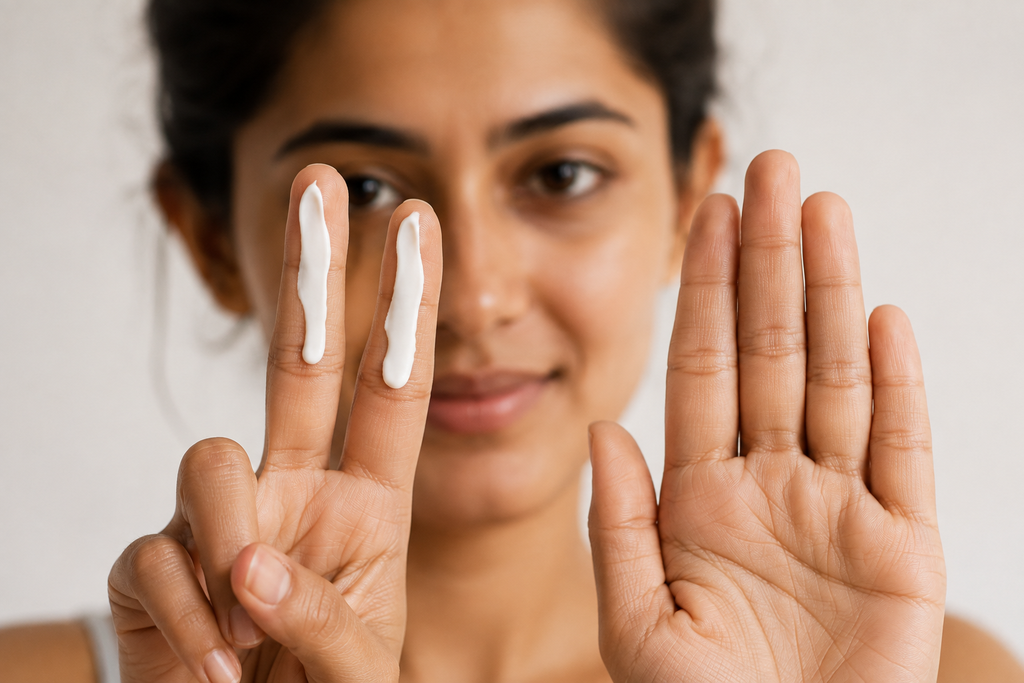
What genuinely decides the outcome is the amount. Two full finger-lengths for face and neck is the common estimate, and most people apply roughly a third of it. A generously applied sunscreen in the “wrong” position will outperform a thin one in the “right” position by a margin no sequencing decision can close.
One point worth stating plainly for a global readership: sunscreen availability differs sharply by country. Filters approved in parts of Europe and East Asia are not all approved elsewhere, and the reverse is also true. If every texture available to you feels heavy, greasy or chalky, that is a formulation problem rather than a personal failing — and it is worth solving, because the best sunscreen is the one you will actually reapply at two in the afternoon.
Myth: You must wait twenty minutes between every layer
Fact: Under a minute is usually plenty. Longer is habit, not requirement.
Somewhere along the line, “let it absorb” inflated into a schedule nobody can keep. Thirty to sixty seconds is enough for most products. Give a slightly longer pause after a strongly acidic or strongly active formula, and a couple of minutes before makeup goes over sunscreen so the film has time to set properly.
The consequence people fear from rushing is not the consequence they actually get. When layers go on too fast, the visible result is pilling — those little rolls of product that appear under your fingertips. It looks bad. It is cosmetic. What it is not is a meaningful loss of protection.
Weigh the trade honestly. A routine demanding twenty minutes of standing around is, for most working adults, a routine that eventually gets abandoned. Skipping sunscreen because the process felt too slow is a real harm. Slight pilling is not.
Myth: Vitamin C belongs only to the morning and retinol only to the night

Fact: One half of that rule is firm. The other is convention.
The pairing is repeated so consistently that it now reads as biology, so the two claims are worth separating.
The retinol half holds up well. Retinoids are light-sensitive, they tend to raise sensitivity to sun, and their effect on cell turnover fits the overnight window neatly. Using them at night is not merely traditional; it is the more sensible reading of how the ingredient behaves.
The vitamin C half is softer than people assume. Antioxidants in the morning make good sense, because free radical exposure peaks during daylight and because they complement sunscreen rather than replace it. But an antioxidant applied at night is not wasted — it is still present in the skin the following day. The stronger argument for splitting the two is comfort: using an acidic antioxidant and a retinoid in a single sitting is a common route to irritation, and separating them removes the guesswork.
So treat the split as a practical convenience rather than a law. If your mornings are chaotic and your evenings are calm, move the antioxidant to the evening and leave the retinoid where it is. A routine performed consistently at a slightly suboptimal hour beats an ideal routine you quietly stop doing by week three.
Myth: Night is when you should pile on the most actives
Fact: The window that makes night effective also makes it unforgiving.
Because night gets framed as “repair time,” people treat it as licence to stack. A retinoid, an exfoliating acid, a peeling essence, a mask, an oil — all in one evening, several evenings a week. Then the stinging arrives, the flaking follows, and the products take the blame.
The barrier is slightly more permeable overnight. That is precisely why a single active works well then, and precisely why four do not. Greater permeability increases absorption of the thing you want and the irritation potential of everything else in the queue.
A strong evening routine usually contains one active. This is not minimalism for its own sake. A damaged barrier undoes months of progress faster than any ingredient can build it. Rotate the rest across the week and leave genuinely blank nights in between.
Myth: Toner is a mandatory second step
Fact: It is optional, and it is no longer the product the rule was written for.
Toner survives in routine diagrams out of inertia. The step originated when cleansers were harsh and alkaline and skin needed rebalancing afterwards. Modern cleansers largely solved that problem, and the category quietly became something else — hydrating essences, lightly exfoliating liquids, delivery vehicles for humectants.
Which means the useful question is not where toner goes. It is whether the bottle on your shelf is doing anything a serum in your routine isn’t already doing better. If it is a hydrating layer you enjoy, keep it. If you bought it because a chart insisted step two exists, you can reclaim that step and the money attached to it.
Myth: Double cleansing every night is non-negotiable
Fact: It solves a specific problem, and you do not always have that problem.
Where it applies, the logic is sound. Sunscreen and long-wear makeup are engineered to resist water and sweat. A single pass with a gentle water-based cleanser often leaves a film behind, and that film sits between your skin and everything applied afterwards. An oil or balm dissolves what water cannot, and the second cleanse clears what remains.
But if you spent the day indoors, wore nothing on your face and applied no sunscreen, you are washing clean skin twice. In dry or cold conditions, and on already-sensitive skin, that is a slow route to barrier damage.
Match the cleanse to the day you actually had. That rule travels well anywhere.
What the Correct AM and PM Skincare Routine Order Looks Like
Morning. Cleanse — or simply rinse with water if your skin runs dry. Apply your lightest treatment while skin is still slightly damp. Moisturise. Finish with a generous layer of broad-spectrum sunscreen, and reapply if you will be outside for any length of time.
Night. Remove sunscreen and makeup properly, cleanse, then apply a single active treatment to dry skin. Moisturise. Add something occlusive — a balm, an oil, a heavier cream — only if your skin still feels tight afterwards.
Set those two beside each other and the honest conclusion appears. The step order is nearly identical. Sunscreen closes the morning, the richest layer closes the night, and everything people argue about lives in the middle, where the stakes are smallest.
Adapting the Sequence to Your Climate

A routine written for a mild temperate city fails quickly elsewhere. Adjust along these axes instead of copying a step list wholesale.
Hot and humid regions. Occlusives trap heat and sweat and can worsen congestion. Use gel or fluid moisturisers, favour lightweight sunscreens, and reapply more often — sweat strips protection faster than time does.
Hot and arid regions. The opposite problem. Ambient dryness pulls water out of skin continuously, so humectants applied alone can backfire. Always seal them with a cream. Night is where the heavy work belongs here.
Cold climates and heated interiors. Indoor heating dehydrates skin as effectively as winter air. Cleanse less often, raise moisturiser richness, and expect actives to feel stronger than they did in summer.
High-altitude and equatorial regions. Ultraviolet intensity climbs with elevation and proximity to the equator, and cool temperatures do nothing to soften it. Sunscreen becomes a year-round fixture rather than a seasonal one.
The Quick-Scan Myth vs Fact Table
| Widely held belief | What actually holds up |
|---|---|
| AM and PM should use the same products | Same skeleton, opposite jobs — defend by day, restore by night |
| Thinnest to thickest is the whole rule | A texture clue; sunscreen, oils and retinoids all break it by design |
| Sunscreen must go before moisturiser | Position is flexible; quantity decides protection |
| Wait twenty minutes between layers | Thirty to sixty seconds is enough for most products |
| Vitamin C is a morning-only ingredient | Morning is a good default, not a requirement |
| Retinol timing is equally flexible | Night is genuinely better — light-sensitive, raises sun sensitivity |
| More actives at night mean faster results | Overnight permeability raises irritation risk as much as absorption |
| Toner is a required step | Optional; judge it as a serum, not a stage |
| Everyone should double cleanse nightly | Only after sunscreen, makeup or a heavy-sebum day |
| Pilling means lost protection | Pilling is cosmetic; under-application is the real failure |
Key Takeaways
- The AM/PM difference is about function, not step count. Defend, then restore.
- Sunscreen quantity outranks sunscreen position by a wide margin.
- The long wait between layers is folklore. Under a minute suits most products.
- One active per evening. Rotate the rest across the week.
- Antioxidant in the morning is a sensible default; retinoid at night is closer to an actual rule.
- Adjust for your climate before you adjust for anyone’s step chart.
- Consistency at an imperfect hour beats perfection you cannot sustain.
Also Read: Korean Glass Skin Routine 2026
Who Should Change Their Routine Tonight — and Who Should Leave It Alone
Act now if you are applying sunscreen thinly or skipping it on overcast days, stacking a retinoid and an acid in the same evening, using a retinoid in the morning, or double cleansing skin that had nothing on it to begin with. These four corrections tend to produce visible change within a few weeks, and none of them requires buying anything.
Wait if your skin is currently stinging, peeling or reactive. Imposing a “correct” order on a compromised barrier just spreads the problem around. Strip back to cleanser, moisturiser and sunscreen for two weeks, then reintroduce one step at a time and watch what happens.
Change nothing if your skin is calm, your routine is consistent, and your sequence roughly matches the one above. The people with the best long-term results are almost never the ones with the most elaborate order. They are the ones who have not rearranged it in a year.

Frequently Asked Questions
Does skincare order actually matter, or is it marketing?
It matters, but less than the industry suggests. Order decides how much of an active reaches skin rather than sitting on top of a cream. Beyond that, what you choose, how much you apply and how consistently you do it explain far more of the outcome.
Can I skip the morning routine entirely and only do nights?
You can skip the serums. You should not skip sun protection. A morning of cleanser and sunscreen will outperform an elaborate evening routine paired with no daytime defence, in any climate.
How long should I wait between skincare layers?
Thirty to sixty seconds suits most products. Allow a little longer after a strongly acidic or active formula, and a couple of minutes before applying makeup over sunscreen so the film can set.
Do I need a separate night cream, or will my day moisturiser do?
Your day moisturiser will work. A night cream is usually richer and more occlusive, which suits higher overnight water loss — genuinely useful in dry or cold conditions, largely unnecessary in humid ones.
Should I wash my face in the morning if I cleansed the night before?
Yes if your skin is oily or breakout-prone, since sebum builds up overnight. Dry or sensitive skin can rinse with water alone and go straight to moisturiser and sunscreen.
Where does eye cream fit in the sequence?
After serums, before moisturiser. It is optional for most people — a gentle facial moisturiser applied carefully around the orbital bone covers much of the same ground.
1 thought on “Morning vs Night Skincare: The Order Most People Get Wrong”
Comments are closed.