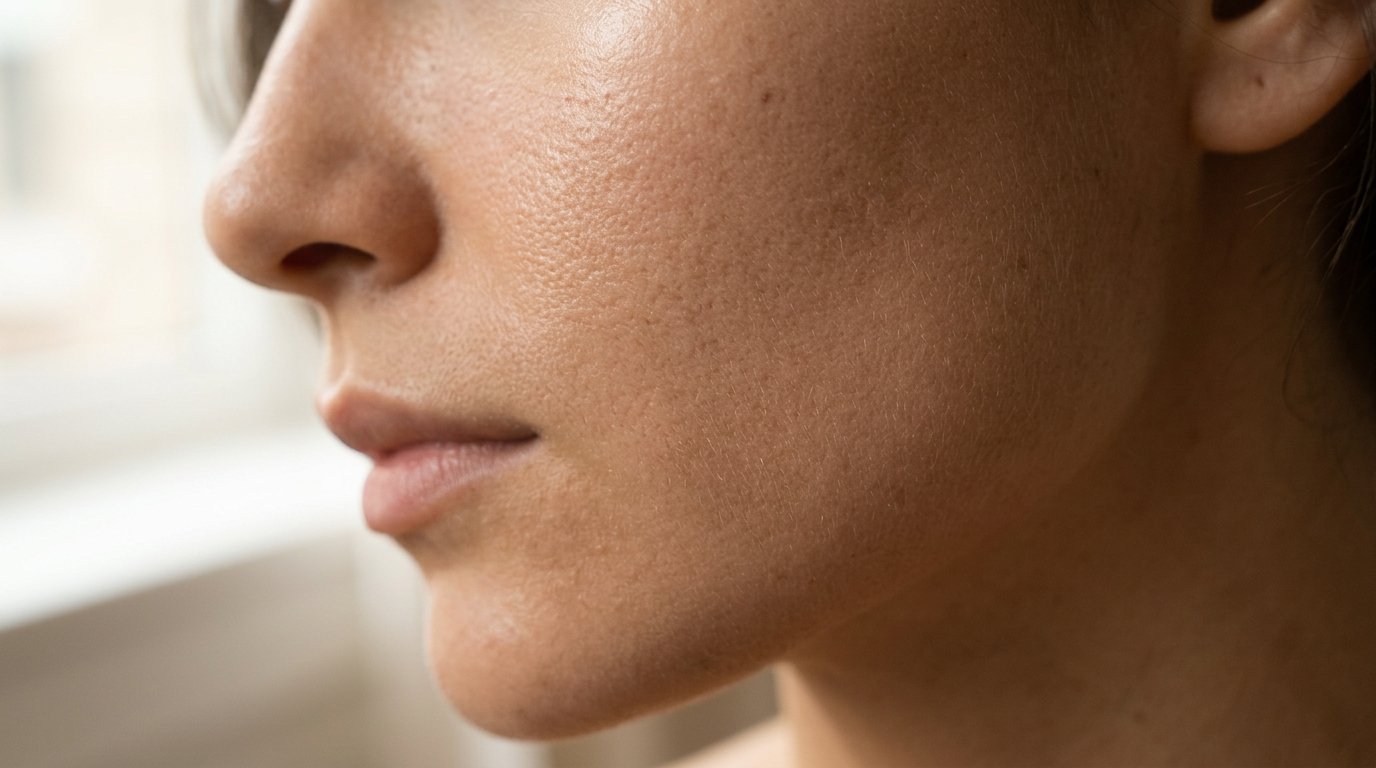
Korean Glass Skin Routine 2026: The Complete 7-Step Breakdown
What glass skin actually is, stripped of the marketing
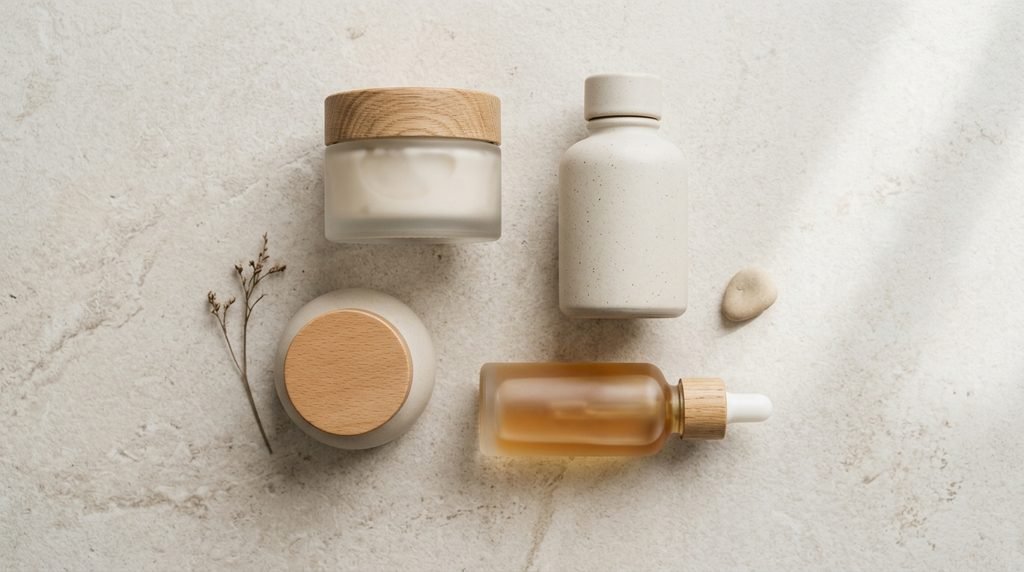
Card: Glass skin is not a product outcome — it is four separate skin properties arriving at the same time, and a routine that ignores any one of them will visibly stall.
The look people are chasing comes down to how skin handles light. Rough, dehydrated or uneven skin scatters light in every direction, which reads as dullness. Smooth, well-hydrated, evenly toned skin reflects light in a more organised way, which reads as luminosity. That is the whole mechanism.
Getting there means hitting four targets at once: water content in the upper layers, surface smoothness, tone uniformity, and barrier integrity. They behave independently. Adding hydration to skin that is dull from texture changes almost nothing. Exfoliating skin that is dull from dehydration makes it worse and faster. Most people who feel the routine has failed them are treating the wrong one of the four with a great deal of commitment.
Worth naming early: the fourth target quietly governs the other three. A compromised barrier loses water no matter how much you apply, exfoliates unevenly, and inflames easily, which shows up as redness that reads as uneven tone. Fix the barrier and the rest becomes achievable. Skip it and nothing holds.
The 7-step Korean glass skin routine 2026, at a glance
Card: Seven steps sounds heavy until you time it — only four run twice a day, and the whole evening sequence fits inside five minutes.
| # | Step | AM | PM | Frequency | Realistic time |
|---|---|---|---|---|---|
| 1 | Oil cleanse | ✗ | ✓ | Nights you wore SPF or makeup | 60–90 sec |
| 2 | Low-pH water cleanse | ✓ | ✓ | Twice daily | 45 sec |
| 3 | Hydrating toner / layered toner | ✓ | ✓ | Twice daily | 30–120 sec |
| 4 | Chemical exfoliant | ✗ | ✓ | 1–3 nights per week | 30 sec |
| 5 | Essence or one targeted serum | ✓ | ✓ | Twice daily | 60 sec |
| 6 | Barrier moisturiser | ✓ | ✓ | Twice daily | 30 sec |
| 7 | SPF (AM) / sleeping pack (PM) | ✓ | ✓ | Daily | 45 sec |
Morning lands around four minutes, evening around five. The reputation this routine has for being time-consuming comes from counting products rather than minutes. The genuine difficulty is not length — it is doing an unremarkable five minutes every night for three months, including the nights you don’t feel like it.
Step 1 — Oil cleanse (evening only)
Card: Sunscreen and sebum are oil-soluble. Water-based cleansers cannot lift them, and whatever you apply next sits on that residue.
Work it into dry skin for about a minute, add water so the formula turns milky, then rinse. This is the step people skip first and regret quietly, because its absence looks like the next four steps underperforming. Serums are rarely the problem; the film underneath them usually is.
Match texture to skin rather than to trend. Balms and richer oils suit dry and normal skin. Light gel-oils and cleansing waters suit oily, congested or acne-prone skin without adding to the load.
One honest exception nobody mentions: on a day with no sunscreen and no makeup, you can skip this step entirely. It is a response to what is actually on your face, not a ritual that earns points for attendance.
Step 2 — Low-pH water cleanse
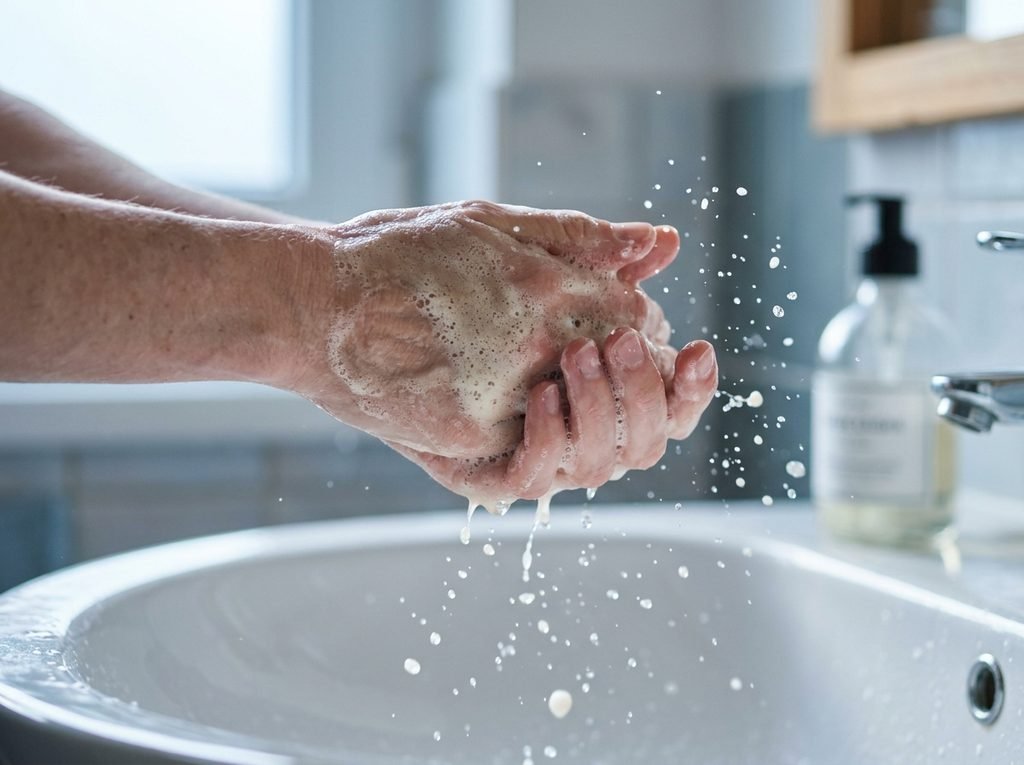
Card: That tight, squeaky feeling after washing is barrier damage announcing itself, and it undermines every step that follows.
Healthy skin sits mildly acidic. Highly alkaline cleansers push it out of that range, strip lipids and leave skin taut — a sensation many people were taught to interpret as cleanliness. It isn’t. It’s the beginning of the dryness they then try to solve with a heavier cream.
Lather briefly, work for thirty to sixty seconds, rinse with lukewarm water, and pat dry rather than rubbing. Look for cleansers described as low-pH, gentle or barrier-friendly, and treat “deep cleansing” and “purifying” claims as warnings rather than selling points if your skin runs dry or reactive.
Mornings need one cleanse, not two. Overnight your skin produces oil and sweat, not dirt. Double cleansing before breakfast removes lipids you spent the night making.
Step 3 — Hydrating toner and the layering technique

Card: Korean toner is a hydration layer, not an astringent — and several thin layers outperform one heavy application.
Apply to skin that is still slightly damp and press it in with your palms rather than wiping with a pad. The layering method — repeating a light, watery toner several times, letting each pass sink in before the next — is responsible for most of the plumpness people associate with this routine. It works because you are raising water content gradually instead of trying to force it in one go.
Three passes suits most people. Five to seven is for very dry skin or a dry season. When layers begin to pill or sit on the surface without absorbing, you have reached saturation — stop there rather than pushing through.
Humectants only do half the job. They draw water in, and in dry air they will pull it out of your skin if nothing seals the layer afterwards. That is why step 6 is not optional.
Step 4 — Exfoliation, scheduled rather than stacked
Card: Dead surface cells scatter light — but over-exfoliation is the single fastest way to lose the result you’re chasing.
Chemical exfoliants do the work here. Broadly: gentler acids for surface tone and dryness, oil-soluble acids for congested pores, and larger-molecule options for sensitive skin that reacts to everything else. Physical scrubs have a limited place and a high error rate.
One to three nights a week is the ceiling for nearly everyone, and one is a perfectly respectable long-term setting. Put exfoliation on fixed nights rather than deciding in the moment — freeform exfoliation quietly becomes daily exfoliation.
The warning signs are consistent: products that were previously comfortable start to sting, skin feels tight after cleansing, new redness appears, and small flaky patches form around the nose and mouth. The fix is not a gentler acid. It is two to three weeks with no acid at all, running steps 2, 3, 6 and 7 only.
Step 5 — Essence or one targeted serum
Card: One well-chosen active, used consistently, beats three stacked on top of each other — every time.
This is where the current routine departs most sharply from the maximalist version. The instinct to layer a brightening serum, a pore serum, an anti-ageing serum and an exfoliating toner in the same session is understandable and reliably counterproductive. Actives compete, irritate, and cancel out the calm surface that makes skin reflective in the first place.
Choose by your dominant concern, not by what is trending. Brightening and antioxidant support in the morning. Repair, calming and elasticity at night. Essences remain worth including as a light hydration and radiance layer — they are the low-risk part of this step.
The wider shift in this category is clinical ingredients migrating into over-the-counter products. Some of that migration is real progress; some of it is a familiar molecule at a fraction of the concentration used professionally, sold at a premium. Before spending, check the priority table below.
Step 6 — Barrier moisturiser
Card: Hydration you don’t seal is hydration you didn’t apply — this step decides whether the previous three survive the night.
Barrier lipids are what hold moisture in. A moisturiser that replenishes them does more for long-term luminosity than any serum in the routine. Look for ceramide-type lipids, fatty alcohols, squalane and simple emollients, and choose weight by skin and season: light gel textures for oily skin and humid conditions, cream for normal, richer balms for dry skin and cold months.
Apply while skin is still faintly damp from step 5. On dry skin, a thin final layer of a heavier occlusive over the top holds water in overnight noticeably better than a single medium-weight cream.
Step 7 — Sun protection by day, sleeping pack by night
Card: Using brightening actives without daily sun protection is paying to stand still.
Ultraviolet exposure drives the uneven tone that the rest of this routine is working to reduce, and it does so year-round, through cloud and glass. If you can only commit to two products in your life, make them a gentle cleanser and a sunscreen — that pair alone outperforms an elaborate routine without one.
Modern formulations have removed most of the old objections: heavy textures, greyish cast, and stinging around the eyes are formulation failures now, not inevitabilities. Test until you find one you will genuinely reapply.
At night, sunscreen is replaced by a richer cream or sleeping pack. Water loss through the skin runs higher during sleep, which is precisely when a sealing layer earns its place.
Ingredient-to-step matrix
Card: Most routine failures are pairing errors, not product-quality errors.
| Step | Ingredient families that belong here | What they target | What not to combine |
|---|---|---|---|
| Toner | Hyaluronic acid, glycerin, panthenol, amino acids | Water content, plumpness | — |
| Exfoliant | AHA, BHA, PHA | Texture, congestion, tone | Retinoids on the same night |
| Serum (AM) | Antioxidants, niacinamide | Brightness, pore appearance | Strong acids in the same routine |
| Serum (PM) | Peptides, centella, panthenol, repair actives | Recovery, calming, elasticity | Multiple actives layered together |
| Moisturiser | Ceramides, squalane, fatty acids, cholesterol | Barrier integrity, water retention | — |
| Night seal | Occlusives, sleeping packs | Overnight water loss | — |
| Sun protection | Mineral or modern chemical filters | Prevention of uneven tone | — |

What each part of the routine is actually worth
Card: Four steps carry the visible result. The rest are refinements, and one category is currently priced far above its evidence.
| Element | What it contributes | Contribution to visible result | Verdict |
|---|---|---|---|
| Daily sun protection | Prevents new uneven tone | Very high | Non-negotiable |
| Barrier moisturiser | Retains water, stabilises skin | Very high | Foundational |
| Gentle cleansing | Protects the barrier daily | High | Foundational |
| Hydrating layers | Immediate plumpness and glow | High | Foundational |
| Measured exfoliation | Smoothness, light reflection | Moderate | Valuable, easily overdone |
| One targeted serum | Addresses a specific concern | Moderate | Worth one, not four |
| Premium regenerative serums | Marketed as cellular repair | Low to uncertain at home | Optional, late-stage |
The pattern here is uncomfortable for the industry and useful for you: the cheapest components do the heaviest lifting. Someone using a gentle cleanser, a ceramide moisturiser and daily sun protection without fail will outperform someone rotating through expensive actives every few months. Novelty is the enemy of results in skincare, not the source of them.
Adapting the routine to your skin and your climate
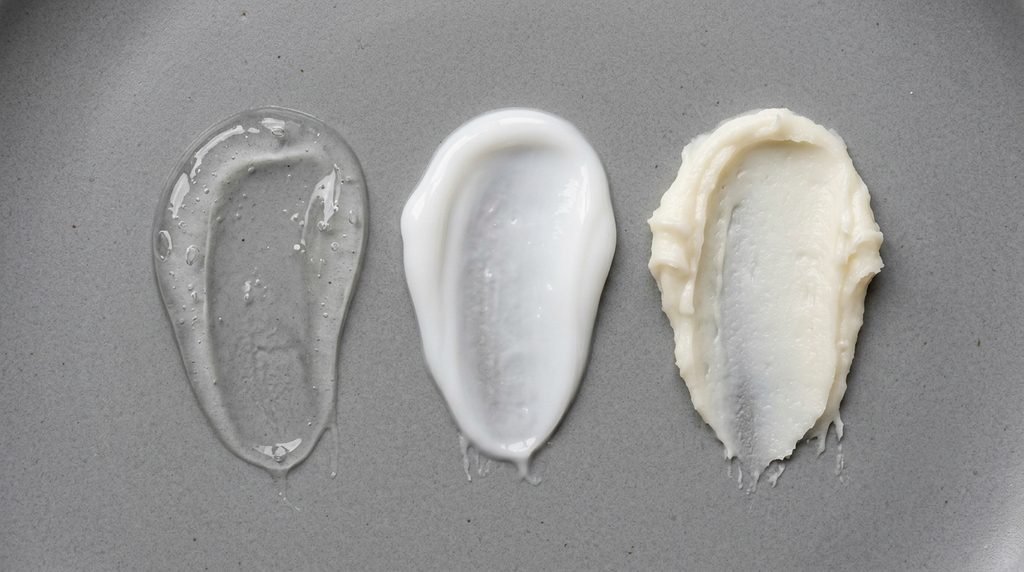
Card: The seven steps stay fixed everywhere. Textures, exfoliant strength and layer count change with skin type and the air you live in.
| Your situation | Step 1 swap | Exfoliant | Toner layers | Moisturiser | Sun protection |
|---|---|---|---|---|---|
| Oily / combination | Gel-oil or cleansing water | Oil-soluble acid, 2× weekly | 2–3 thin | Water-gel | Fluid or gel |
| Dry | Balm or rich oil | Gentle acid, 1× weekly | 5–7 | Ceramide cream + occlusive | Hydrating cream |
| Sensitive | Fragrance-free balm | Mild acid or none | 2, unscented | Calming, minimal formula | Mineral filter |
| Acne-prone | Non-comedogenic gel-oil | Oil-soluble acid, 2× weekly | 2–3 | Light gel-cream | Non-comedogenic fluid |
| Mature | Balm cleanser | Gentle acid, 1–2× weekly | 3–5 | Peptide-rich cream | Cream, high protection |
| Humid tropical climate | Light gel-oil | 1–2× weekly | 2–3 | Gel or lotion only | Fluid, reapplied often |
| Hot arid climate | Balm | 1× weekly | 5–7 | Cream plus occlusive | Cream, high protection |
| Cold winter / indoor heating | Balm | 1× weekly, or pause | 5–7 | Balm or heavy cream | Cream, still daily |
| Temperate, four seasons | Balm in winter, gel-oil in summer | 2× weekly | 3, more in winter | Rotate by season | Year-round |
Two variables that international guides rarely mention. Hard water leaves mineral residue that dries skin and dulls the finish — a final rinse with filtered or bottled water, or a shower filter, is a genuine improvement in hard-water regions. And air-conditioned or centrally heated interiors are drier than most outdoor climates, so if you spend your day indoors, adapt to the room rather than the weather forecast.
Product availability differs enormously by country, and no routine should depend on a specific label being stocked near you. Everything above is written as formulation criteria for exactly that reason. Read ingredient lists, not brand stories.
How long does glass skin actually take?
Card: Something changes within a week. The change worth committing for arrives around week eight.
| Timeframe | What typically changes | What has not changed yet |
|---|---|---|
| Days 1–7 | Surface hydration, less tightness, softer feel | Tone, texture, congestion |
| Weeks 2–4 | Smoother surface, makeup sits better, early glow | Pigmentation, redness |
| Weeks 4–6 | Noticeably more even light reflection | Deeper discolouration |
| Weeks 8–12 | Tone evens, barrier holds through weather shifts | Pore structure |
| Beyond 12 weeks | Compounding stability; skin tolerates more | — |
Tie your expectations to the renewal cycle rather than to before-and-after photography. The first week is water, and water leaves. Real structural change tracks the roughly four-week turnover of the upper layers, which is why a fair assessment period is two full cycles. Anything advertising a transformation in seven days is describing temporary plumping — pleasant, real, and gone by the weekend if you stop.
What this routine cannot do
Card: Pore size, scarring and clinical skin conditions sit outside the reach of any topical routine, however well built.
Pore diameter is largely inherited. You can empty pores, reduce inflammation around them and soften how they catch light — you cannot shrink the structure, and any product claiming otherwise is describing a temporary optical effect. Deep textural scarring, stubborn pigmentation disorders and persistent inflammatory conditions need professional treatment, not a longer routine.
It’s also worth saying plainly that much of the imagery attached to this trend is the product of lighting, lens choice and retouching as much as skincare. The realistic ceiling for a well-run routine is skin that looks smooth, even, comfortable and healthily reflective in ordinary daylight — which is a genuinely good outcome, and not the same thing as looking like glass.
If your skin is persistently red, painful, cystic or reacting to almost everything, see a qualified professional before adding steps. Layering products onto inflamed skin reliably makes it worse, and it wastes months.
Also Read: Face Massage Beauty Tips: 3 Steps to Instant Glow
Who should start this routine now — and who should wait
Start now if your skin is stable, your current routine is either minimal or an accumulation of impulse purchases, and sun protection is inconsistent. This system will beat both, and the two changes that matter most — daily sun protection and a proper barrier moisturiser — are among the cheapest things in it.
Start, but strip it back, if your barrier is currently compromised. Run steps 2, 3, 6 and 7 for a month. No acids, no actives, no new products. Reintroduce step 5 only once nothing stings, then leave exfoliation until the month after that.
Wait if you’re mid-course on a prescribed treatment or under active care for a skin condition. Layering seven steps onto a clinical regimen is how people end up with worse skin and a crowded shelf. Ask which steps are compatible first — usually the gentle cleanse, moisturiser and sun protection are welcome, and the exfoliant is not.
Don’t bother yet with premium regenerative serums if the foundational four steps haven’t been running daily for two solid months. No ingredient compensates for an inconsistent routine, and the readers who see the most dramatic results are almost never the ones with the most expensive shelf.
KEY TAKEAWAYS
- The Korean glass skin routine 2026 keeps seven steps but shifts emphasis from exfoliation to barrier repair.
- Only four steps run twice daily; the full evening sequence takes about five minutes.
- One targeted active beats several layered together — stacking is the most common failure mode.
- Cleansing gently, sealing the barrier and protecting from sun carry most of the visible result.
- Adapt textures and layer counts to your climate and water, not to someone else’s bathroom.
- Expect surface hydration in week one and meaningful change between weeks eight and twelve.
- Pore structure, scarring and clinical conditions are outside what any routine can deliver.
FAQ
Can you achieve glass skin without Korean products?
Yes. This is a sequence and a formulating philosophy, not a nationality requirement. Korean brands earned their reputation because they execute gentle cleansers, light hydrating layers and cosmetically pleasant sunscreens unusually well at accessible prices — but a well-formulated ceramide cream and sunscreen from any market, used in the same order, produce the same result.
Is the ten-step routine obsolete?
Not obsolete, just no longer the default. The current thinking favours intelligent layering over sheer product count. A core of cleanser, one treatment, moisturiser and sun protection is enough for most people, with additional layers added only where a specific concern justifies them.
Does this routine work on oily or acne-prone skin?
Yes, with substitutions. Use a light gel-oil first cleanse, an oil-soluble exfoliant, two thin toner layers rather than seven, and a water-gel moisturiser. The mistake oily skin makes is avoiding hydration altogether — oily skin is frequently dehydrated underneath, and dehydrated skin often produces more oil in response.
How much should a complete routine cost?
Less than the category implies. A functional seven-step set can be assembled at modest prices in most markets, and the two items worth paying more for are the moisturiser and the sunscreen, because you use them every day forever. Premium regenerative serums are simultaneously the most expensive and the least essential items on the list.
Can I use an antioxidant serum and an exfoliant together?
Better not to, at least not in the same routine. Keep antioxidants to the morning and exfoliation to two or three evenings a week. Running both at once is a dependable route to irritation, and irritated skin produces exactly the uneven, light-scattering surface you’re trying to eliminate.
If I could only do one step, which should it be?
Daily sun protection. Every other step in this routine improves skin that sunscreen is protecting. Without it, brightening and smoothing work simply run against a fresh supply of new damage, and the routine never gets ahead.
1 thought on “Korean Glass Skin Routine 2026”
Comments are closed.